A reminder about widget links
Google has long taken a strong stance against links that manipulate a site’s PageRank. Today we would like to reiterate our policy on the creation of keyword-rich, hidden or low-quality links embedded in widgets that are distributed across various sites.
Widgets can help website owners enrich the experience of their site and engage users. However, some widgets add links to a site that a webmaster did not editorially place and contain anchor text that the webmaster does not control. Because these links are not naturally placed, they’re considered a violation of Google Webmaster Guidelines.
Below you can find the examples of widgets which contain links that violate Google Webmaster Guidelines:


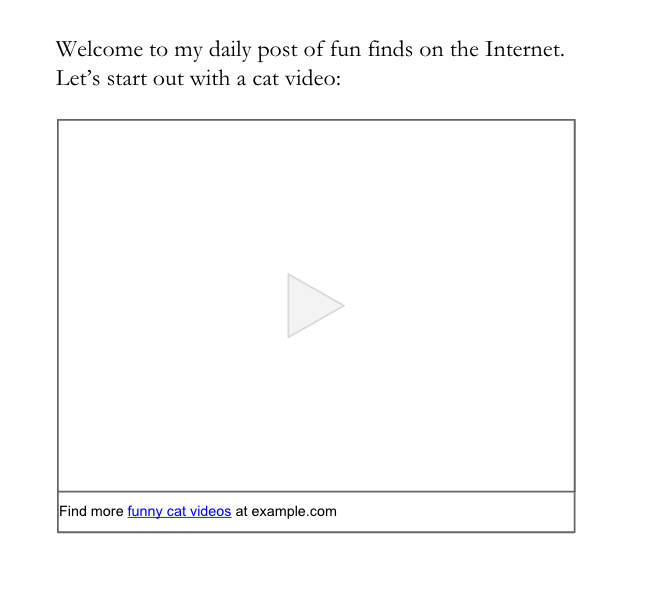
Google’s webspam team may take manual actions on unnatural links. When a manual action is taken, Google will notify the site owners through Search Console. If you receive such a warning for unnatural links to your site and you use links in widgets to promote your site, we recommend resolving these issues and requesting reconsideration.
You can resolve issues with unnatural links by making sure they don’t pass PageRank. To do this, add a rel=”nofollow” attribute on the widget links or remove the links entirely. After fixing or removing widget links and any other unnatural links to your site, let Google know about your change by submitting a reconsideration request in Search Console. Once the request has been reviewed, you’ll get a notification about whether the reconsideration request was successful or not.
Also, we would like to remind webmasters who use widgets on their sites to check those widgets for any unnatural links. Add a rel=”nofollow” attribute on those unnatural links or remove the links entirely from the widget.
For more information, please watch our video about widget links and refer to our Webmaster Guidelines on Link Schemes. Additionally, feel free to ask questions in our Webmaster Help Forums, where a community of webmasters can help with their experience.
Posted by Agnieszka Łata, Trust & Safety Search Team and Eric Kuan, Webmaster Relations Specialist


Why Content Marketing’s Future Depends on Shorter Content and Less Content
Posted by ronell-smith
Steve Rayson’s latest BuzzSumo article is provocative, interesting and well-written. But I do hope he’s wrong when he says the future will be about more content, not less. He shares why he thinks content marketing brands will begin producing more content in the days ahead, and how they’ll likely be successful by doing so.
Upon reading the piece, I did a facepalm. I was reminded of a conversation I had a few years back, when I walked into the break room of the agency I was working for, and almost bumped into the content specialist on my team.
After we exchanged pleasantries, she informed me of an unwise decision she was about to make.
Her: “Guess what? I’m going to run a marathon.”
Me: “Why?”
Her: “I think it’ll be fun.”
Me: “OK. How many marathons have you run? And have you been training for this one?”
Her: “I’ve never ran one, but there are a lot of training guides online; they say it only takes 17 weeks to train for it.”
Me: “…”

The philosophy of doing a lot what we don’t yet do well is ruining content marketing — and the knees, joints and backs of wannabe marathoners.
If you doubt that, please explain why 90% of what’s published online barely rises to the level of crap.
Anyone who disagrees with that statement is either (a) fooling themselves or (b) never had to conduct a content audit.
Even for big brands, producing quality content with frequency is seemingly near-impossible task
Therefore, when someone says “create more content,” I hear “brands will continue to waste resources that would be better spent elsewhere,” for now. Worse still, it means they’ll see the failure as not one of execution, but born of content marketing itself.

Rayson is a solid content marketer working for a brand with a strong product. I admire them both. And while I don’t mean to attack him, I would like to tackle the logic of the post, which I’ll excerpt below.
[Eds. note: The primary reason I chose to tackle this topic is because content frequency and content length remain two of the biggest albatrosses impacting our industry. Despite this fact, many fail to see how related they are. That is, many brands are failing fast by chasing the long-form posts and frequent posting unicorn. Also, I’m very clear in understanding that Rayson is not advocating for quantity at the expense of quality. My contention is simply that quantity is typically the wrong goal, at least for the vast majority of brands.]
You’re a brand who publishes content, not a brand publisher
The Washington Post now publishes around 1,200 posts a day. That is an incredible amount of content. My initial reaction when I read the statistic was ‘surely that is too much, the quality will suffer, why produce so much content?’ The answer seems to be that it works. The Post’s web visitors have grown 28% over the last year and they passed the New York Times for a few months at the end of 2015.
As a former journalist who spent four years in a newsroom, I’ve always been against the brands as publisher mantra, in large part because, well, as a brand you ARE NOT a publisher. Publishing content no more makes you a publisher than running 26 miles makes someone a marathoner. Newsrooms are built to produce lots of content.
There are often dozens of editors, copy editors, line editors and writers on staff, so quality control is baked in and a priority. Additionally, a newspaper writer can easily write several stories a day and not break a sweat, owing to an environment that places premium on speed.
By contrast, most many content marketers use junior writers or, worse still, content mills, that deliver low-quality posts for $20.
It’s very unlikely that attempting to follow the path of newspapers would prove fruitful.
Better idea: Determine the cadence with which your brand can create uniquely valuable content, which Rand defined and described in a 2015 Whiteboard Friday. The key is to focus the lion’s share of your attention on creating content that’s exclusive and recognized as best-by-far in its class.

Will WaPo’s strategy work for your brand?
I think whilst it is true that content will take a wider range of forms, including interactive content, the future is not less content but the opposite.
My reasoning is based on a number of factors including the effectiveness of the strategy adopted by the Post and others. … As we noted above the number of pages Google has indexed over 7 years from 2008 to 2014 has increased from 1 trillion to 30 trillion.That is an increase of 29 trillion pages in 7 years. The number of net additional pages indexed by Google each year appears to be increasing, it was 3 trillion in 2010, 5 trillion in 2012 and 8 trillion in 2014.
I’m of the opinion that seeing WaPo’s strategy as anything but “effective for them” is a mistake. As anyone who’s been around the marketing space for any amount of time can attest, chasing what another brand has been successful at is a bad idea. Yes, you should be aware of what the competition is doing, but seeing their success as anything more than unique to them, or their vertical, is a recipe for pain.
Remember, too, that WaPo isn’t selling anything but ad space, not products, so the more real estate the better for them/businesses like them.
Also, the rapid rise in number of pages indexed by Google would seem to highlight one thing: A lot of brands are investing in content; it doesn’t mean a lot of brands are being successful with it.
Better idea: After finding your cadence and nailing quality consistently, test frequency along with elements such as length and content type to find the right balance for your brand.

Quality and quantity typically go in the opposite direction
As the costs of production, storage and distribution fell, particularly with online and digital products, it became economically attractive to provide products for the long tail niche audience, in fact revenue from the long tail became greater than the hits because the tail was very long indeed. Companies like Amazon and Netflix were arguably some of the first long tail companies.
Unlike WaPo, which buys ink by the proverbial barrel and has a stout staff, most brands have razor-thin content teams, increasing the likelihood that producing more and more content means increased expenditure as new team members must be hired and vetted or contractors are hired.
As I experienced while working for an agency, brands expect that as the cost rises, so too do their rankings and traffic, which is not typically the case. And when those two don’t move in lockstep, the spigot is shut off, often for good.
Better idea: Develop a goal for your content that’s in line with your brand’s goals, then let your marketing team test and refine the publishing schedule. You’re likely to find that the right cadence to nail quality is fewer but bigger content pieces.
Don’t conflate strategy with the goal
By creating over 1,000 pieces of content a day you are more likely to cater for demand in the long tail for specific niche content or simply to produce content that engages a wider audience. … Sites such as BuzzFeed have also increased their content production, the Atlantic recently reported the following figures:
April 2012 BuzzFeed published 914 posts and 10 videos
April 2016 BuzzFeed published 6,365 posts and 319 videos
Again, these are — even in the case of BuzzFeed — media companies we’re talking about, so it’s not surprising that traffic, frequency and quality can continue in the same direction. For most brands, two out of three is the gold standard and one out of three is the norm.
Better idea: Stop thinking you’re a media company. It’s OK to adopt a strategy that includes more frequent publishing, but that strategy must fit inside your brand’s overall goals, not vice-versa.
Shares are the cotton candy of content marketing
When I looked recently at the most shared content published by marketing and IT sites, the data confirmed that on average long form posts achieved more shares. But when I looked in more detail at the 50 most shared posts, 45 of them were short form and under 1,000 words. Thus people are very happy to share short form content and given the pressures on everyone’s time may prefer short form content. …
I personally think there is a big opportunity for short form content and I aim to adapt my strategy to focus more on repurposing and republishing short form versions of my research that focus on specific issues. These could be focused around just a single image or chart.
On this point, I largely agree with Rayson insofar as shorter content, with rare exception, should be a part of your brand’s content strategy (this post notwithstanding). I know, I know, many of you do very well with posts of varying lengths. I get that. What I’m saying is your content should be assigned, not by your whims or the needs of the brand, but by the needs of the audience.
And certainly not based on shares, which, as we know from a recent Moz and BuzzSumo post, do not correlate with the all-important links.
In many cases and for many brands, shares are a distraction serving to keep our attention away from the important elements of content marketing. I liken them to the cotton candy at the county fair: a lot of puff, but not nearly as filling as that smoked turkey leg.

When creating content, we should begin with empathy being top-of-mind. That’s when you can allow your inner journalist to soar:
- Who benefits most from this information (i.e., who, specifically, am I talking to?)
- What are their specific needs?
- Why is my brand uniquely qualified to satisfy those needs?
- How can I best depict and share the information?
- When is the optimal time to create, share and promote it?
Notice I never mentioned length. That was intentional.
The length of your content should be determined by your audience, not your brand.
A recent study by Chartbeat, which looked at user behavior across 2 billion visits over the web during the course of a month, found that 55% of visitors spent fewer than 15 seconds actively on a page. 15 seconds!
Better idea: If readers aren’t spending a great deal of time on our site’s we should reward them, not punish them: create short but meaty posts; share graphics with a few lines of commentary to invite comments; share videos or podcasts you’ve enjoyed, as curated content; or ask a question, then be the first answer, nudging others to dive into the fray.
Whatever direction you decide to go in, do so with guidance from your audience and/or would-be audience.
Imagine a world filled with web searcher advocates
Again, this post is not meant as an attack on Raysons’ post. If anything, I wanted to take the opportunity to reiterate to folks that content marketing isn’t an either/or game; it’s a long-haul game, a “this and that” game, an iterative game.
As someone who’s been made sick from doing deep dives into clients’ content, I feel strongly that we often need to protect brands from themselves. Big budgets and large teams don’t prevent marketers from making bad decisions.
I’ve made it clear to prospects and clients that I’m there as an advocate for them, but first and foremost I’m an advocate for web searchers. The more and the better I can help brands be the chosen result (not merely the top result), consistently, the happier we will all be.
Who’s willing to join me on the web searcher advocate crusade?
Sign up for The Moz Top 10, a semimonthly mailer updating you on the top ten hottest pieces of SEO news, tips, and rad links uncovered by the Moz team. Think of it as your exclusive digest of stuff you don’t have time to hunt down but want to read!
The Future of the Moz Community
Posted by Dr-Pete
As many of you know, Moz recently went through a major reorganization, which included the loss of 28% of our staff. Our Community team was heavily impacted, which has understandably led to speculation about the future of the Moz Community. I want to specifically address those concerns, project by project. The Moz Community is an essential part of our past and future, and while we can’t ignore the reality and difficulty of our recent losses, we believe strongly in our Community and are doing our best to chart a path forward.
A personal note
I asked to write this post, knowing it wouldn’t be easy. I’ve been a member of the Moz Community for almost 10 years. When my first YouMoz post was promoted in April 2007, I didn’t realize it would be the start of a decade-long journey. The Moz Community made my career in SEO possible, and I’ll always be grateful for that.
The people affected by the past few weeks are my peers and friends, and I take that loss personally. It’s ok to take that personally. At the same time, there are 160 peers and friends still at Moz trying to figure out how to do more with less, and they believe in our Community, too. We will make mistakes along the way, and we will need your help.
I and the entire Moz team would also like to thank the departing members of the Community team – Jen, Erica, Charlene, and Matt – for all of their contributions over the years building and maintaining a thriving community. This has been a month of difficult decisions driven by both unpleasant financial realities and shifts in Moz strategy, but we do not take their contributions for granted.
A few clarifications
Before diving in project-by-project, I’d like to clarify a few points. First, we did not lose the entire Community team – Megan and Danielle are still at Moz, and they’ve been with the team since 2011 and 2013, respectively. They know our Community well.
The day-to-day of our main blog is (and has been) run by members of our Audience Development team (Trevor and Felicia, with the help of the Marketing team), which is separate from the Community team. Moz Q&A and Social are a joint effort between Community, Customer Support, and a group of dedicated industry experts known as Moz Associates. It takes a lot of hard-working, dedicated people to create a world-class community.
The Big List
Here is a list of all of our major Moz Community-focused projects, and the status of those projects as best we know today. I will try to be as transparent as possible.
(1) MozCon 2016
Please be assured that MozCon 2016 is full speed ahead. Erica and Charlene graciously agreed to stay with Moz through the conference, and everything will proceed as originally planned. We look forward to seeing many of you in Seattle next week. When you see them, please thank Erica and Charlene for everything they’ve done to make MozCon a great event.
(2) MozCon 2017
We’ve had many conversations about MozCon 2017 in the past two weeks, and have committed to moving forward with our flagship event. As originally planned, MozCon 2017 will take place in Seattle, from July 17–19. We realize that an event of the size and quality of MozCon is not an easy thing to pull off, but we have many team members who have been actively involved in past events and we will collectively work hard to maintain the MozCon tradition.
(3) Moz Blog
Before Moz was a company and long before it was a product, there was a blog. The Moz Blog has our full support, will remain a core part of our Community, and we will continue to support and update big content projects, including The Beginner’s Guide to SEO. We are 100% committed to maintaining strong educational resources for the SEO community.
(4) YouMoz
Prior to the reorganization, we had started some difficult conversations about YouMoz. As our Community and the entire world of content marketing has evolved, the quantity of submissions has increased while the quality has suffered. This left our team spending a large amount of time on managing the queue and editing posts. It also meant that good posts had to wait longer to be published, frustrating our best contributors.
In the near future, YouMoz will be phased out in favor of a better guest contributor process and system for the Moz Blog. Our hope is to offer guest authors higher-profile opportunities on the main blog. We will also be exploring ways to allow our community to pitch blog topic ideas without submitting an entire post, to save everyone time and frustration.
I have a long, personal history with YouMoz, and this is a difficult decision, but as a content marketer I also know that our world has changed dramatically in the past couple of years. We will do our best to adapt to those changes and give our Community the chance to contribute in meaningful ways.
(5) Moz Q&A
A few months back, we started looking for a new technology platform for the Q&A forum, one that could better serve our evolving community. Those plans will continue forward. Our Community team is working hard to launch a better Q&A engine that can support both our Moz Pro and Moz Local customer communities, as well as the broader SEO community. We are fully committed to a new and improved Q&A in the coming months that supports a wide range of SEO conversations and helps the next generation of marketers grow in their careers.
(6) Social media
Obviously, the Community team had a huge hand in growing and managing our various social channels. Many of those channels have also changed, with Facebook pushing hard toward paid inclusion and Google+ facing an uncertain future. Megan, Danielle, and our Customer Support team are committed to actively supporting Twitter and our other existing channels, even as we look for the best ways to engage our Community in the broader social world.
We will continue to explore new channels, such as Instagram, as well as better ways to engage with old channels, including LinkedIn. Thanks to support teams in the UK and Australia, we will soon have 24/7 social coverage on major channels.
The coming months
Ultimately, our commitment to the Moz Community will be judged by our actions in the coming weeks and months and not just by our words. Our resources are more constrained now, but our dedication is as strong as ever. I’d like to thank all of you for supporting us over the years, and I hope that you will continue this journey with us as we explore the future of the industry and the Community.
If you have specific questions or concerns, please feel free to ask in the comments, and I will do my best to address them (or find someone on our team who can). We look forward to seeing many of you at MozCon next week!
Sign up for The Moz Top 10, a semimonthly mailer updating you on the top ten hottest pieces of SEO news, tips, and rad links uncovered by the Moz team. Think of it as your exclusive digest of stuff you don’t have time to hunt down but want to read!
SearchCap: Google web reviews, security reports & Penguin update
Below is what happened in search today, as reported on Search Engine Land and from other places across the web.
The post SearchCap: Google web reviews, security reports & Penguin update appeared first on Search Engine Land.
Please visit Search Engine Land for the full article.
MarTech Europe is just 2 months away, don’t miss out!
We’re now less than two months away from MarTech Europe, which will take place in London on 1-2 November, and my anticipation is building. The high-velocity exchange of ideas and experiences at MarTech always teaches me so much about the rapidly evolving practice of marketing technology in B2B and…
Please visit Search Engine Land for the full article.
Should you still be using an SEO enterprise platform?
Enterprise search software can provide powerful insights and management capabilities, but do you really need it? Columnist Ian Bowden discusses the most common features of these platforms and why you might (or might not) want to invest in them.
The po…
Why retailers shouldn’t overlook the value of m-commerce apps
Recent stats suggest that the mobile web has the edge over apps in terms of m-commerce sales, but this doesn’t mean retailers should dismiss apps.
SEO Six Sigma: 5 ways to scale your enterprise operation
Need to improve your SEO processes for scalability? Columnist Jim Yu shows how the Six Sigma framework can help.
The post SEO Six Sigma: 5 ways to scale your enterprise operation appeared first on Search Engine Land.
Please visit Search Engine Land f…
How to market your online business for free
Here we present 32 tips to give your online business a boost without the need of a credit card.
Guide on how to create a Snapchat Geofilter for your business
Want to use filters of your own? Or market them? Here’s a complete guide on how to create a SnapChat filter!
Post from Tara West
The Advertisers Guide to Snapchat Geofilters
A deep-dive into Sponsored On-demand Geofilters as they are arguable one of the easiest and most accessible Snapchat ad formats to get started with.
Post from Tara West
Showcase your site’s reviews in Search
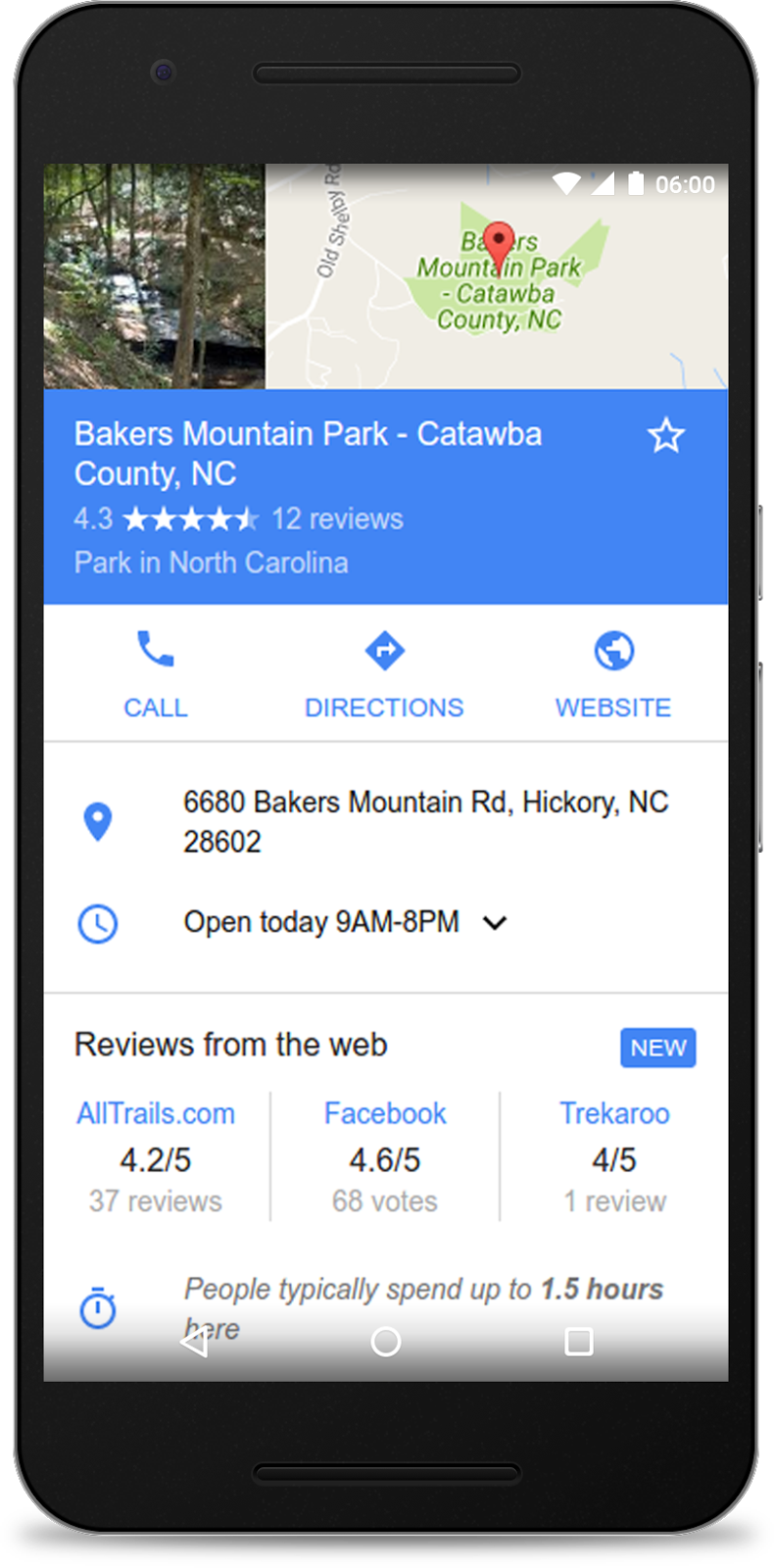
Today, we’re introducing Reviews from the web to local Knowledge Panels, to accompany our recently launched best-of lists and critic reviews features. Whether your site publishes editorial critic reviews, best-of places lists, or aggregates user ratings, this content can be featured in local Knowledge Panels when users are looking for places to go.
Reviews from the web
Available globally on mobile and desktop, Reviews from the web brings aggregated user ratings of up to three review sites to Knowledge Panels for local places across many verticals including shops, restaurants, parks and more.
By implementing review snippet markup and meeting our criteria, your site’s user-generated composite ratings will be eligible for inclusion. Add the Local Business markup to help Google match reviews to the right review subject and help grow your site’s coverage. For more information on the guidelines for the Reviews from the web, critic review and top places lists features, check out our developer site.
Critic reviews
In the U.S. on mobile and desktop, qualifying publishers can participate in the critic review feature in local Knowledge Panels. Critic reviews possess an editorial tone of voice and have an opinionated position on the local business, coming from an editor or on-the-ground expert. For more information on how to participate, see the details in our critic reviews page.

The local information across Google Search helps millions of people, every day, discover and share great places. If you have any questions, please visit our webmaster forums.
Posted by Ronnie Falcon, Product Manager

Showcase your site’s reviews in Search
Today, we’re introducing Reviews from the web to local Knowledge Panels, to accompany our recently launched best-of lists and critic reviews features. Whether your site publishes editorial critic reviews, best-of places lists, or aggregates user ratings, this content can be featured in local Knowledge Panels when users are looking for places to go.
Reviews from the web
Available globally on mobile and desktop, Reviews from the web brings aggregated user ratings of up to three review sites to Knowledge Panels for local places across many verticals including shops, restaurants, parks and more.
By implementing review snippet markup and meeting our criteria, your site’s user-generated composite ratings will be eligible for inclusion. Add the Local Business markup to help Google match reviews to the right review subject and help grow your site’s coverage. For more information on the guidelines for the Reviews from the web, critic review and top places lists features, check out our developer site.
Critic reviews
In the U.S. on mobile and desktop, qualifying publishers can participate in the critic review feature in local Knowledge Panels. Critic reviews possess an editorial tone of voice and have an opinionated position on the local business, coming from an editor or on-the-ground expert. For more information on how to participate, see the details in our critic reviews page.
The local information across Google Search helps millions of people, every day, discover and share great places. If you have any questions, please visit our webmaster forums.
Posted by Ronnie Falcon, Product Manager
Google adds ‘Reviews from the web’ to critic reviews in local search results
To be considered for inclusion, sites will need to use review snippet markup.
The post Google adds ‘Reviews from the web’ to critic reviews in local search results appeared first on Search Engine Land.
Please visit Search Engine Land for the full article.
What will make your social audience click (if it’s not clickbait)?
Facebook is cracking down on clickbait. Again. So what will make your social media audience click now?
Google Logo For Start Of Paralympics
Today the Paralympics has started and Google has a special logo…
Google Analytics Real Time Not Working For Some
Since last night, some have been sporadically complaining that the Google Analytics Real Time reports are not loading. Instead they are getting an error that reads “resource is not available, please try again later…
Google: We’re Working On The Penguin Launch Announcement
We must be close if Google is actively working on their announcement for when Penguin 4.0 goes live.
John Mueller of Google said this at the 44:30 mark into yesterday’s hangout on YouTube Live…
Google AdWords Adds Campaign Groups & Performance Targets
Google announced on the AdWords blog two new features to help you track your AdWords performance, campaign groups and performance targets…
Google: Site Command Should Show Rich Snippets If Implemented Correctly
One of the more common technical SEO questions I see is why isn’t Google showing rich snippets for my site when I have implemented them correctly. So we know that Google often won’t show rich snippets if the site doesn’t meet a certain (undocumented) …