Five content promotion strategies SaaS marketers should implement today
Having a content promotion strategy is essential to build your content marketing success. Try out these five tactics to give your content the boost it deserves.
The post Five content promotion strategies SaaS marketers should implement today appeared first on Search Engine Watch.
Google On Changing Last Modified Date In XML Sitemaps Too Often
If you read the Google docs on XML Sitemaps and look at the lastmod field, Google says “Google reads the lastmod value, but if you misrepresent this value, we will stop reading it.” Lily Ray asked John Mueller of Google if changing the lastmod date of…
Google Search Console Dataset Report Warnings May Spike
If you use dataset structured data then you may see a spike in warnings in your Google Search Console enhancement report for those datasets. Google said it is now reporting warnings for any Dataset object that is missing the recommended property “creat…
Search Buzz Video Recap: SEOs Brace For The Next Google Core Update, Search Console Updates & New Structured Data
I did this video from my home office desk location, I figured I’d change it up a bit. This week, SEOs are beginning to brace themselves for the next big core update – it can be out any day now. Google has a new way to report false positives…
Apple Search
Google, Google, Google
For well over a decade Google has dominated search to where most stories in the search sphere were about Google or something on the periphery.
In 2019 Google generated $134.81 billion in ad revenues.
When Verizon bought core Yahoo three years ago the final purchase price was $4.48 billion. That amount was to own their finance vertical, news vertical, web portal, homepage, email & web search. It also included a variety of other services like Tumblr.
Part of what keeps Google so dominant in search is their brand awareness. That is also augmented by distribution as defaults in Chrome and Android. Then when it comes to buying search distribution from other players like Mozilla Firefox, Opera or Apple’s Safari they can outbid everyone else as they are much better at monetizing tier 2 markets and emerging markets than other search companies are since they have such strong ad depth. Even if Bing gave a 100% revshare to Apple they still could not compete with Google in most markets in terms of search monetization.
Apple as a Huge Search Traffic Driver
In 2019 Google paid just under £1.2 billion in default payments for UK search traffic. Most of that went to Apple. Historically when Google broke out their search revenues by region typically the US was around 45% to 46% of search ad revenue & the UK was around 11% to 12%, so it is likely Google is spending north of $10 billion a year to be the default search provider on Apple devices:
Apple submitted that search engines do not pay Apple for the right to be set as the primary default search engine on its devices. However, our assessment is that Google does pay to be the primary default on Apple devices. The agreement between Google and Apple states that Google will be the default web search provider and the same agreement states that Google will pay Apple a specified share of search advertising revenues. We also note that Google does not pay compensation to any partners that set Google Search as a secondary option. This further suggests that Google’s payment to Apple is in return for Apple setting Google as the primary default.
Apple is glad to cash those checks & let Google handle the core algorithmic search function in the web browser, but Apple also auto-completes many searches from within the address bar via various features like website history, top hit, news, Siri suggested website, suggested sites, etc.
A Unique Voice in Search
The nice thing about Apple powering some of those search auto-complete results themselves is their results are not simply a re-hash of the Google search results so they can add a unique voice to the search marketplace where if your site isn’t doing as well in Google it could still be promoted by Apple based on other factors.
High-traffic Shortcuts
Apple users generally have plenty of disposable personal income and a tendency to dispose of much of it, so if you are an Android user it is probably worth having an Apple device to see what they are recommending for core terms in your client’s markets. If you want to see recommendations for a particular country you may need to have a specialized router targeted to that country or use a web proxy or VPN.
Most users likely conduct full search queries and click through to listings from the Google search result page, but over time the search autocomplete feature that recommends previously viewed websites and other sites likely picks up incremental share of voice.
A friend of mine from the UK runs a local site and the following shows how the Apple ecosystem drove nearly 2/3 of his website traffic.
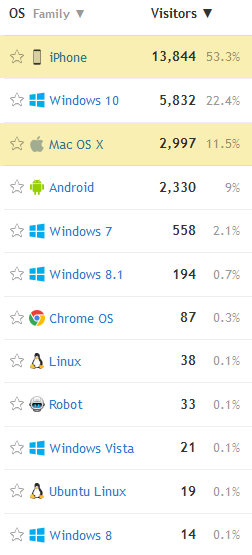
His website is only a couple years old, so it doesn’t get a ton of traffic from other sources yet. As of now his site does not have great Google rankings, but even if it did the boost by the Apple recommendations still provides a tailwind of free distribution and awareness (for however long it lasts).
For topics covered in news or repeat navigational searches Apple likely sends a lot of direct visits via their URL auto-completion features, but they do not use the feature broadly into the tail of search across other verticals, so it is a limited set of searches that ultimately benefit from the shortcuts.
Apple Search Ranking Factors
Apple recently updated their search page offering information about Applebot:
Apple Search may take the following into account when ranking web search results:
- Aggregated user engagement with search results
- Relevancy and matching of search terms to webpage topics and content
- Number and quality of links from other pages on the web
- User location based signals (approximate data)
- Webpage design characteristics
Search results may use the above factors with no (pre-determined) importance of ranking. Users of Search are subject to the privacy policy in Siri Suggestions, Search & Privacy.
I have seen some country-code TLDs do well in their local markets in spite of not necessarily being associated with large brands. Sites which do not rank well in Google can still end up in the mix provided the user experience is clean, the site is useful and it is easy for Apple to associate the site with a related keyword.
Panda-like Quality Updates
Markets like news change every day as the news changes, but I think Apple also does some Panda-like updates roughly quarterly where they do a broad refresh of what they recommend generally. As part of those updates sites which were once recommended can end up seeing the recommendation go away (especially if user experience declined since the initial recommendation via an ad heavy layout or similar) while other sites that have good engagement metrics get recommended on related searches.
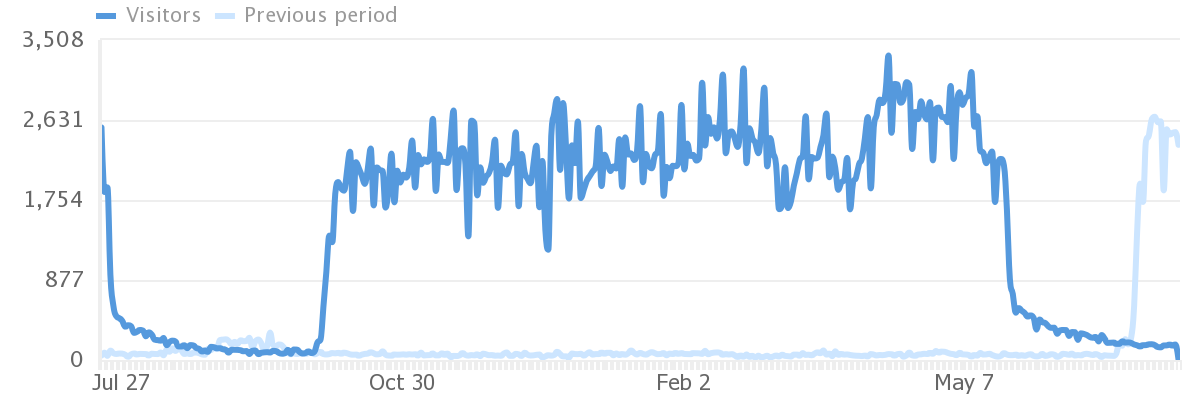
A friend had a website they sort of forgot that was recommended by Apple. That site saw a big jump on July 9, 2018 then it slid back in early August that year, likely after the testing data showed it wasn’t as good as some other site Apple recommended. They noticed the spike in traffic & improved the site a bit. In early October it was widely recommended once again. That lasted until May of 2019 when it fell off a cliff once more. They had monetized the site with a somewhat spammy ad network & the recommendation mostly went away.
The recommendations happen as the person types and they may be different for searches where there is a space between keywords and the word is ran together. It is also worth noting Apple will typically recommend the www. version of a site over the m. version of a site for sites that offer both, so it makes sense to ensure if you used separate URLs that the www version also uses a responsive website design.
Indirect Impact on Google
While the Apple search shortcuts bypass Google search & thus do not create direct user signals to impact Google search, people who own an iPhone then search on a Windows computer at work or a Windows laptop at home might remember the site they liked from their iPhone and search for it once more, giving the site some awareness that could indirectly bleed over into impacting Google’s search rankings.
Apple could also eventually roll out their own fully featured search engine.
Categories:
Apple Search
Google, Google, Google
For well over a decade Google has dominated search to where most stories in the search sphere were about Google or something on the periphery.
In 2019 Google generated $134.81 billion in ad revenues.
When Verizon bought core Yahoo three years ago the final purchase price was $4.48 billion. That amount was to own their finance vertical, news vertical, web portal, homepage, email & web search. It also included a variety of other services like Tumblr.
Part of what keeps Google so dominant in search is their brand awareness. That is also augmented by distribution as defaults in Chrome and Android. Then when it comes to buying search distribution from other players like Mozilla Firefox, Opera or Apple’s Safari they can outbid everyone else as they are much better at monetizing tier 2 markets and emerging markets than other search companies are since they have such strong ad depth. Even if Bing gave a 100% revshare to Apple they still could not compete with Google in most markets in terms of search monetization.
Apple as a Huge Search Traffic Driver
In 2019 Google paid just under £1.2 billion in default payments for UK search traffic. Most of that went to Apple. Historically when Google broke out their search revenues by region typically the US was around 45% to 46% of search ad revenue & the UK was around 11% to 12%, so it is likely Google is spending north of $10 billion a year to be the default search provider on Apple devices:
Apple submitted that search engines do not pay Apple for the right to be set as the primary default search engine on its devices. However, our assessment is that Google does pay to be the primary default on Apple devices. The agreement between Google and Apple states that Google will be the default web search provider and the same agreement states that Google will pay Apple a specified share of search advertising revenues. We also note that Google does not pay compensation to any partners that set Google Search as a secondary option. This further suggests that Google’s payment to Apple is in return for Apple setting Google as the primary default.
Apple is glad to cash those checks & let Google handle the core algorithmic search function in the web browser, but Apple also auto-completes many searches from within the address bar via various features like website history, top hit, news, Siri suggested website, suggested sites, etc.
A Unique Voice in Search
The nice thing about Apple powering some of those search auto-complete results themselves is their results are not simply a re-hash of the Google search results so they can add a unique voice to the search marketplace where if your site isn’t doing as well in Google it could still be promoted by Apple based on other factors.
High-traffic Shortcuts
Apple users generally have plenty of disposable personal income and a tendency to dispose of much of it, so if you are an Android user it is probably worth having an Apple device to see what they are recommending for core terms in your client’s markets. If you want to see recommendations for a particular country you may need to have a specialized router targeted to that country or use a web proxy or VPN.
Most users likely conduct full search queries and click through to listings from the Google search result page, but over time the search autocomplete feature that recommends previously viewed websites and other sites likely picks up incremental share of voice.
A friend of mine from the UK runs a local site and the following shows how the Apple ecosystem drove nearly 2/3 of his website traffic.
His website is only a couple years old, so it doesn’t get a ton of traffic from other sources yet. As of now his site does not have great Google rankings, but even if it did the boost by the Apple recommendations still provides a tailwind of free distribution and awareness (for however long it lasts).
For topics covered in news or repeat navigational searches Apple likely sends a lot of direct visits via their URL auto-completion features, but they do not use the feature broadly into the tail of search across other verticals, so it is a limited set of searches that ultimately benefit from the shortcuts.
Apple Search Ranking Factors
Apple recently updated their search page offering information about Applebot:
Apple Search may take the following into account when ranking web search results:
- Aggregated user engagement with search results
- Relevancy and matching of search terms to webpage topics and content
- Number and quality of links from other pages on the web
- User location based signals (approximate data)
- Webpage design characteristics
Search results may use the above factors with no (pre-determined) importance of ranking. Users of Search are subject to the privacy policy in Siri Suggestions, Search & Privacy.
I have seen some country-code TLDs do well in their local markets in spite of not necessarily being associated with large brands. Sites which do not rank well in Google can still end up in the mix provided the user experience is clean, the site is useful and it is easy for Apple to associate the site with a related keyword.
Panda-like Quality Updates
Markets like news change every day as the news changes, but I think Apple also does some Panda-like updates roughly quarterly where they do a broad refresh of what they recommend generally. As part of those updates sites which were once recommended can end up seeing the recommendation go away (especially if user experience declined since the initial recommendation via an ad heavy layout or similar) while other sites that have good engagement metrics get recommended on related searches.
A friend had a website they sort of forgot that was recommended by Apple. That site saw a big jump on July 9, 2018 then it slid back in early August that year, likely after the testing data showed it wasn’t as good as some other site Apple recommended. They noticed the spike in traffic & improved the site a bit. In early October it was widely recommended once again. That lasted until May of 2019 when it fell off a cliff once more. They had monetized the site with a somewhat spammy ad network & the recommendation mostly went away.
The recommendations happen as the person types and they may be different for searches where there is a space between keywords and the word is ran together. It is also worth noting Apple will typically recommend the www. version of a site over the m. version of a site for sites that offer both, so it makes sense to ensure if you used separate URLs that the www version also uses a responsive website design.
Indirect Impact on Google
While the Apple search shortcuts bypass Google search & thus do not create direct user signals to impact Google search, people who own an iPhone then search on a Windows computer at work or a Windows laptop at home might remember the site they liked from their iPhone and search for it once more, giving the site some awareness that could indirectly bleed over into impacting Google’s search rankings.
Apple could also eventually roll out their own fully featured search engine.
Categories:
Google Ads Mistakes to Avoid — Best of Whiteboard Friday
Posted by DiTomasoContrary to popular belief, SEO and PPC aren’t at opposite ends of the spectrum. There are plenty of ways the two search disciplines can work together for benefits all around, especially when it comes to optimizing your Google Ads. In…
Using Customer Intent Data to Drive Business Decisions
Learn how aggregating intent data from a category can inform business decisions. Moving from a mind-set of “people searching this term want that outcome”, to one of “this category has these characteristics”, opens up a whole host of new opportunities.
Post from Jack Telford
See how visits to retail, grocery, workplaces are trending with Google Mobility Reports
How to use Google (and Apple) mobility reports to see how movements have shifted during the pandemic.
Please visit Search Engine Land for the full article.
See how visits to retail, grocery, workplaces are trending by area with Google Mobility Reports
How to use Google (and Apple) mobility reports to see how movements have shifted during the pandemic.
Please visit Search Engine Land for the full article.
Is Apple getting real about search and about to take on Google?
Multiple indicators suggest Apple may be stepping up its search efforts.
Please visit Search Engine Land for the full article.
Report Issues To Google Search Over Security Issue False Positives
Google has a new form you can use to report false positives around security issues with your site. In short, if you think your site was mistakenly flagged by Google Search for security issues, you can ask Google for a review using the “Report a Securi…
Most Google Support Documents Are Not Proactively Updated
Yesterday in the Google Webmaster Virtual Unconference I asked a Google representative to guess on what percentage of the Google support documents were updated in a proactive way versus a reactive way. The Googler said 60-80% of the time, the docs are…
New Google Home Activities Structured Data
Google added a new section to the supported structured data developer docs for home activities. This structured data should be used on recorded or live videos where you offer instructions on what activities, like fitness classes and so on, to do from y…
Bing: XML Sitemaps Must Include Main Ranking & Category Pages
Bing’s Fabrice Canal said on Twitter “Sitemaps are a daily, and ideally real time, snapshots of all relevant pages of your sites.” “Sitemaps must include these main ranking pages,” he added. This was in response to Dawn Anderson posting something a dev…
Google: Crawling Bandwidth Benefit To Using jpeg vs webp But Minimal
Google’s John Mueller said on Twitter there is maybe a small bandwidth savings when it comes to GoogleBot crawling your site when you use webp over jpeg image formats. But then you would only see that difference when the site is a “very image-heavy si…
How to teach an old blog new SEO tricks
Over time, a blog can accumulate broken links and other things that negatively impact rankings and lose SEO mojo. Here’s a nine-step SEO revamp guide for your old blog site.
The post How to teach an old blog new SEO tricks appeared first on Search Engine Watch.
Getting back to the office
Gauging interest With such unprecedented circumstances and everyone adapting to the new normal in real-time, getting a sense of how every single member of our team were feeling was essential. On top of the multitude of day-to-day initiatives the team created to keep in regular communication, we ran regular surveys to get first-hand feedback on […]
The post Getting back to the office appeared first on Builtvisible.
Home activities structured data now supported by Google Search
Google just added new search development documents for this structured data type.
Please visit Search Engine Land for the full article.
Content marketing fails: How to analyze and improve
What do you do when you follow a content marketing guide but it fails anyway? Here are all the ways you can analyze your failures and improve on them.
The post Content marketing fails: How to analyze and improve appeared first on Search Engine Watch.