Younger users rely on snippets and knowledge panel, often don’t click, survey says
Yet ‘position zero’ doesn’t always win says survey, which reveals relatively discerning users.
Please visit Search Engine Land for the full article.
Google Ads script: How to automatically apply bid modifiers
Here’s a bid modifier script for in-market and remarketing audiences, device and location targeting.
Please visit Search Engine Land for the full article.
15 advanced link building tactics & tips to boost your SEO
Link building remains the SEO industry’s white elephant. Many proclaim that link building is spammy, dead, and even harmful to your SEO. But link building remains a primary part of an effective performance-based SEO strategy. And when executed properly contributes to higher organic search rankings. I recently gave a presentation at YoastCon 2019 outlining my […]
The post 15 advanced link building tactics & tips to boost your SEO appeared first on Yoast.
How to get brand URLs in Google AMP cache by extending TLS for Web Package
Please visit Search Engine Land for the full article.
The path to effective keyword targeting in Google Shopping
Optimize shopping campaigns with n-grams.
Please visit Search Engine Land for the full article.
Does Google Data Studio Sample Google Analytics Data?
Google Data Studio, a free online data visualization tool, connects to a multitude of data sources including Google Analytics.
If you have a very high volume of Google Analytics data, and use Data Studio for reporting and analysis, it’s possible you may experience data discrepancies between what the Google Analytics interface displays and what you see in Data Studio.…
The post Does Google Data Studio Sample Google Analytics Data? appeared first on Seer Interactive.
Three ideas to create a high-converting product page
We reviewed the best practices of ecommerce leaders and success stories of smaller merchants. Three life hacks to make product pages convert more visitors.
The post Three ideas to create a high-converting product page appeared first on Search Engine Watch.
SEO guide to optimizing your LinkedIn profile for more connections, better leads
Learn how to craft messages for new connections and attract clients to your profile with this SEO guide to LinkedIn optimization.
Please visit Search Engine Land for the full article.
Google search spend growth slows as click volume rises, reports show
Mobile continues to fuel growth in click share and spend, and Shopping remains steady growth vehicle for retail spend.
Please visit Search Engine Land for the full article.
App-marketer spending on Apple Search Ads Grew by 90% in less than a year
The data come from Kenshoo’s Q1 2019 Quarterly Trends Report, capturing trends from more than $6 billion in ad spend.
Please visit Search Engine Land for the full article.
App-marketer spending on Apple Search Ads equals Google, Facebook Combined
The data come from Kenshoo’s Q1 2019 Quarterly Trends Report, capturing trends from more than $6 billion in ad spend.
Please visit Search Engine Land for the full article.
Google Maps Business Reviews Vanishing After Suspension Removal
There are numerous reports of Google Maps listings, Google My Business listings that have had their suspension removed then seeing all of the reviews they had on their listings vanish. Joy Hawkins at the Local Search Forums wrote “listings that are su…
Google Images, Featured Snippets & Videos More Often In Web Search Results
It looks like Google is showing more vertical search features in the core web search results – more often. Yesterday I covered at Search Engine Land that the image search box is showing up way more often in Google’s web results than previously. But a…
Searchers Upset That Easter Got Google Treatment While Passover, Ramadan & Others Did Not
Google on Sunday had a pretty unique and new home page feature for Easter. It was the first time they did something like this in general but not the first time they had an Easter Google Doodle. There was no Doodle, but if you clicked on the I’m Feeli…
Google Can See Disavow Links Between Canonical URLs
Google’s John Mueller said it is best to disavow all the possible places the link may be pointing to, even if you redirect one URL to another and someone is linking to the original URL. But he said Google can follow and see “links between canonical UR…
Google updates Custom Search mobile layout
Redesign includes the search box and refinements, thumbnails and pagination
Please visit Search Engine Land for the full article.
Enriching Search Results Through Structured Data
For many years we have been recommending the use of structured data on websites to enable a richer search experience. When you add markup to your content, you help search engines understand the different components of a page. When Google’s systems understand your page more clearly, Google Search can surface content through the cool features discussed in this post, which can enhance the user experience and get you more traffic.


We’ve worked hard to provide you with tools to understand how your websites are shown in Google Search results and whether there are issues you can fix. To help give a complete overview of structured data, we decided to do a series to explore it. This post provides a quick intro and discusses some best practices, future posts will focus on how to use Search Console to succeed with structured data.
What is structured data?
Structured data is a common way of providing information about a page and its content – we recommend using the schema.org vocabulary for doing so. Google supports three different formats of in-page markup: JSON-LD (recommended), Microdata, and RDFa. Different search features require different kinds of structured data – you can learn more about these in our search gallery. Our developer documentation has more details on the basics of structured data.
Structured data helps Google’s systems understand your content more accurately, which means it’s better for users as they will get more relevant results. If you implement structured data your pages may become eligible to be shown with an enhanced appearance in Google search results.
Disclaimer: Google does not guarantee that your structured data will show up in search results, even if your page is marked up correctly. Using structured data enables a feature to be present, it does not guarantee that it will be present. Learn more about structured data guidelines.
Sites that use structured data see results
Over the years, we’ve seen a growing adoption of structured data in the ecosystem. In general, rich results help users to better understand how your pages are relevant to their searches, so they translate into success for websites. Here are some results that are showcased in our case studies gallery:
- Eventbrite leveraged event structured data and saw 100% increase in the typical YOY growth of traffic from search.
- Jobrapido integrated with the job experience on Google Search and saw 115% increase in organic traffic, 270% increase of new user registrations from organic traffic, and 15% lower bounce rate for Google visitors to job pages.
- Rakuten used the recipe search experience and saw a 2.7X increase in traffic from search engines and a 1.5X increase in session duration.
How to use structured data?
There are a few ways your site could benefit from structured data. Below we discuss some examples grouped by different types of goals: increase brand awareness, highlight content, and highlight product information.
1. Increase brand awareness
One thing you can do to promote your brand with structured data is to take advantage of features such as Logo, Local business, and Sitelinks searchbox. In addition to adding structured data, you should verify your site for the Knowledge Panel and claim your business on Google My Business. Here is an example of the knowledge panel with a Logo.

2. Highlight content
If you publish content on the web, there are a number of features that can help promote your content and attract more users, depending on your industry. For example: Article, Breadcrumb, Event, Job, Q&A, Recipe, Review and others. Here is an example of a recipe rich result.

3. Highlight product information
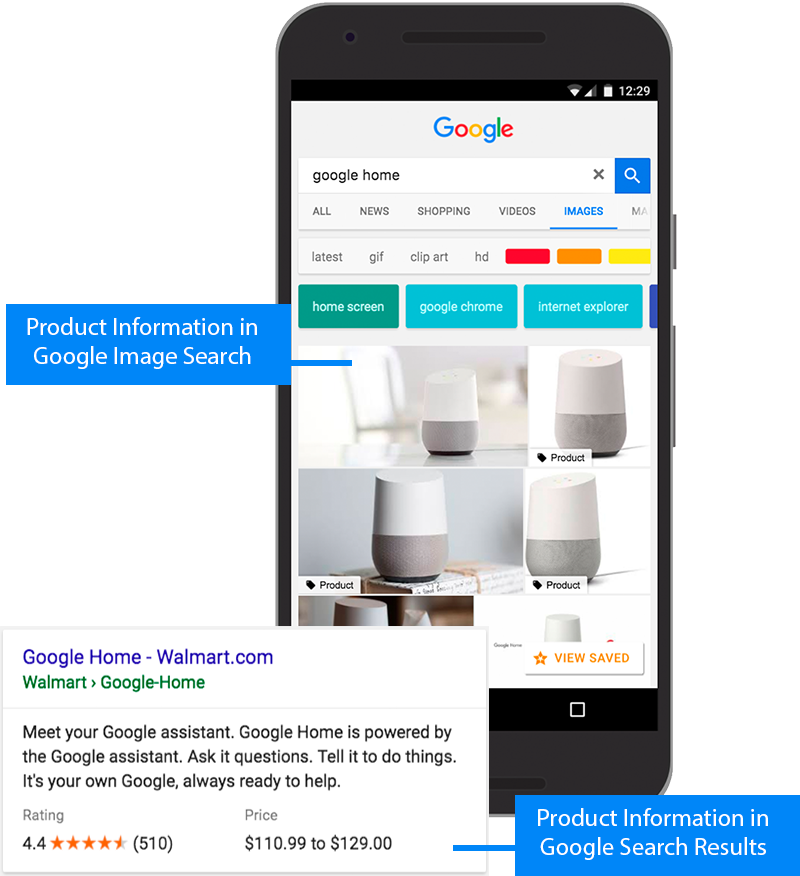
If you sell merchandise, you could add product structured data to your page, including price, availability, and review ratings. Here is how your product might show for a relevant search.
Try it and let us know
Now that you understand the importance of structured data, try our codelab to learn how to add it to your pages. Stay tuned to learn more about structured data, in the coming posts we’ll be discussing how to use Search Console to better analyze your efforts.
We would love to hear your thoughts and stories on how structured data works for you, send us any feedback either through Twitter or our forum.
Posted by Daniel Waisberg, Search Advocate


Google My Business: POI Establishment Category
I am seeing reports of business owners and local SEOs saying they are seeing a new category being added to some of the business listings they manage. The category is called POI Establishment and folks are confused what this is about, espesially because…
Google Search Console Coverage Report Delayed 16 Days & Counting
It is now 16 days and counting since the Google Search Console Coverage report has been updated. Two-weeks later than the normal two-day delay and there is no end in sight. I’ve been seeing complaints pointed at Google’s John Mueller on Twitter with z…
Google: AJAX/XHR Calls Can Impact Crawl Budget
Google’s Gary Illyes posted on Twitter this morning that he updated the crawl budget post from January 2017 to explicitly say that AJAX (i.e. XHR) calls were added to the list of things that will consume your site’s crawl budget.