Event When Former Googlers Reports Spam, It Takes A Long Time To Be Removed
Last week, I spotted former Googler Natalie Glance, who worked at Google as an Engineering Manager for almost 8 years, post on Google+ about spam in the Google search results.
Her former colleague, Todd Underwood from Google…
Google manual action penalties were due to links for freebies
A month ago, we reported that Google had issued warnings to bloggers over providing links in return for free products to review. … read more
Develop free, lightweight attribution insights for your paid & organic channels
Looking to reallocate or reduce your paid search spend and not sure where to start? Columnist Chris Liversidge shows how you can identify opportunities by comparing your paid and organic search performance data by keyword and device.
The post Develop …
How to Communicate Effectively With Your Clients and Colleagues
Effective communication is key to a successful business relationship. Paul Hunter explains how you can utilise the DISC system to learn how to become an effective communicator within your team.
Post from Paul Hunter
SEO is more than just organic traffic: Are you taking all the credit you deserve?
Many in the industry still cling to the growth of organic as the metric to measure success but, while it’s still very important, we’re not measuring like for like when comparing with years gone by.
So how are SEOs missing out on credit, and what else should they be looking at?
Organic search has changed
Traditionally, the way we judge the success of an SEO campaign is by the growth of the organic channel. In essence, the more visits and sessions that come through this channel, the better.
While search has become more expansive, encompassing everything from online PR to social, this metric of success has remained constant.
Put simply, though, this isn’t as simple a metric as it once was to judge success.
By making technical changes to improve a website and producing engaging content, you can make sure your web presence gives off all the best signals to Google and hope that has a positive effect on organic traffic.
However, as Google’s algorithm becomes more precise and complex upon how it analyses sites, it’s not a sure thing.
Organic search is primarily about SERP rankings but, with new additions to results pages such as the carousel and answer box, good rankings aren’t the sole route to success.
Google carousel

For example, there’s evidence that the answer box – which scrapes content from ranking results – quite often doesn’t choose the top ranking site.
So, even if the authority of your site means you’re not ranking as well as you could, Google could still recognise quality information and place you in the answer box.
Conversely, you may be ranking well but may not be receiving the clickthrough rate that you once did if a competitor gets their content in the answer box.
The importance of quality on-site copy has, therefore, never been more pressing.
The boundary between organic and direct has blurred
As the industry has naturally evolved it’s become more difficult to definitively attribute traffic to one channel or another.
A number of factors, including improvements in browser technology, have meant that traffic that would once have been attributed as organic traffic is now being attributed as direct.
Although technology is advanced in these fields, SEOs are still selling themselves short by just looking at organic when, as part of optimising organic, we can drive more traffic than we are often credited for.
Groupon ran an experiment in 2014 in which it deindexed itself for a full six hours (not something we’d recommend trying!) to try and understand how users were truly getting to their site.
By deindexing its website, Groupon removed the possibility of users finding their site through search.
Users could still get to the page by entering the website URL in the address bar, for example, or if they had it saved in their bookmarks, but it allowed Groupon to look at how both direct and organic search was affected by it.
Measuring its longer URLs (e.g. www.groupon.com/local/san-francisco/restaurants), the company saw that as organic traffic dropped to near zero after the change, direct traffic also dropped by 60%.
This big chunk of what Groupon thought was direct traffic dropped as soon as the site was de-indexed.
Indexing is purely for search purposes so that Google can crawl your site and offer you up in its SERPs.
If this traffic disappeared, it could indicate a couple of things. While the problem could be metric based, for example, an issue with the website’s Google Analytics tracking, it could also be as a result of misattribution.
One study isn’t evidence of an industry-wide problem, but it does highlight the need for SEOs to better understand and measure the true source of their website’s traffic.
Browsers have become more advanced
The way we search has changed and that’s partly due to the advancement of browsers. Modern browsers have evolved to look and work differently to their ancestors.
In the past, when we were searching for something online, we would enter the address of a search engine and then search for the query or just search directly from the address bar.
The search engine then delivered SERPs based on our query and we would click through to the relevant website.
While that is still a common method users use to search, today, browsers may even suggest a URL from your history when you start typing a query in its address bar.
If you click on this suggested URL, that traffic bypasses a search engine and is attributed as direct. Browsers such as Chrome or Safari are clever enough to now know what brand you’re searching for even after an incomplete search is entered.
In both instances, this means that some traffic you once took previously took credit for as organic could now be recorded as direct traffic and therefore not reported on.
Fig 1. Safari suggests a website

Fig 2. Desktop chrome suggests relevant URLs from a user’s history based on a generic query

Impact of mobile
Mobile browser usage varies quite a lot compared to desktop. While Chrome and Safari still take up most of the market, Android’s own internet browser is used by around 11% of mobile users, and Firefox barely features at all.
This is important as, even since improvements in the referral data from mobile visits, there’s still a lack of consistency.
Some mobile applications often do not send referral data, so traffic almost always comes through as direct.
For example, if a user clicks through to your site from a Google Maps app – an app which pulls data from the Google My Business listings you’ve optimised as part of your SEO strategy – then you’re probably not getting the credit for it.
Fig 3. The Apple Maps app uses Yelp & Apple Maps Connect to send traffic to a website, however, this is attributed as ‘direct’.
Google Earth and the Google Maps app will also attribute this to ‘direct’.


Apps taking organic traffic
Another reason why we may see less organic traffic hitting a website is if a user has an app for the relevant site that appears in the SERP.
Clicking the SERP listing can now direct users straight to the content ‘in-app’, without hitting the website at all.
If you are solely responsible for sending users to a website, this will reduce the amount of traffic you’re seeing.
Local listings and Yelp
Local listings are vital to businesses with physical premises, especially those who rely on local trade.
The people nearest to you are most likely to use your services, so making sure you’re being exposed to this audience is vital.
However, they can also be of great benefit to your SEO strategy.
The most important part of local listings is that you have standardised, consistent details about your business across the web, particularly the name, address and phone number (NAP details) – specifically in your Google My Business account.
The details you put in are dragged through to Google SERPs with local listings and Google Maps / Google Earth so they need to be correct.
Your business listing will be more trusted, and rank better if Google can see that the NAP details are consistent across a number of aggregators.
So, it’s for that reason that many SEOs undertake a task of adding consistent listings on platforms such as Yelp.
Fig 4. Yelp, a local search engine or a social platform?

This issue here is that by creating and optimising this listing (initially to boost their organic local presence), many SEOs neglect to take credit for the relevant traffic that these places can drive.
Yelp, for example, has around 150m unique users per month. While it is technically classed as a social platform by Google Analytics (by default, this can be reconfigured), it has many of the same features as a ‘local search engine’.
We also have various changes that Google has made in recent years to the layout in mobile SERPs.
Currently, the ‘local pack’ doesn’t have an immediate website click-through option unless the listing is expanded.
The main action you’re encouraged to do is click-to-call, an action that will bypass the website (and any call tracking), thus SEOs may neglect to take credit for that call.
Fig 5. A mobile SERP for the term ‘sheds’, showing click to call option in the ‘local pack’

There currently isn’t any robust way of understanding what traffic the My Business listing brings via analytics, but you can regularly share the reports dashboard provided in the platform to highlight your work.
Google isn’t the only map
Google Maps is a great tool, but it’s also not the only tool out there. Apple Maps, while still lagging behind Google Maps, has the advantage of being pre-loaded on millions of new iPhones.
The rival to Google Maps uses a number of sites to pull through its data, but you can be sure it will pull your Yelp business listing so you need to make sure they are optimised.
You can also add/manage your listing via ‘Maps Connect’. As with Google Maps, traffic from Apple Maps generally is attributed as direct.
This means that even if you’ve optimised your listings you’re not getting the credit through those precious organic search listings.
In summary…
We can compartmentalise different aspects of search into organic and paid channels but the end goal is the same: impressions, clicks and, ultimately, conversions.
Instead of splitting our departmental efforts into individual channels, we need to realise that search has changed.
The organic channel is still an important metric to measure success, but there is so much more to showing the true value that your endeavours as an SEO brings.
Taking a narrow view of ‘solely measuring success via improvements to the organic channel’ is neglecting the wider value of your digital marketing endeavours.
The key to all of this is data is simple: make sure you know where to get all the information that shows the value you’re providing and take credit for it.
Send your client or managers reports from your My Business account, Apple Maps Connect and try to understand the organic influence on direct, Yelp and others.
Include referral traffic data from links and listings that you created and app analytics data with organic as the source.
Look at all the work you do across your campaigns and provide examples and data to show the full effect your work is having.
SEO is more than just organic traffic: Are you taking all the credit you deserve?
Many in the industry still cling to the growth of organic as the metric to measure success but, while it’s still very important, we’re not measuring like for like when comparing with years gone by.
So how are SEOs missing out on credit, and what else should they be looking at?
Organic search has changed
Traditionally, the way we judge the success of an SEO campaign is by the growth of the organic channel. In essence, the more visits and sessions that come through this channel, the better.
While search has become more expansive, encompassing everything from online PR to social, this metric of success has remained constant.
Put simply, though, this isn’t as simple a metric as it once was to judge success.
By making technical changes to improve a website and producing engaging content, you can make sure your web presence gives off all the best signals to Google and hope that has a positive effect on organic traffic.
However, as Google’s algorithm becomes more precise and complex upon how it analyses sites, it’s not a sure thing.
Organic search is primarily about SERP rankings but, with new additions to results pages such as the carousel and answer box, good rankings aren’t the sole route to success.
Google carousel
For example, there’s evidence that the answer box – which scrapes content from ranking results – quite often doesn’t choose the top ranking site.
So, even if the authority of your site means you’re not ranking as well as you could, Google could still recognise quality information and place you in the answer box.
Conversely, you may be ranking well but may not be receiving the clickthrough rate that you once did if a competitor gets their content in the answer box.
The importance of quality on-site copy has, therefore, never been more pressing.
The boundary between organic and direct has blurred
As the industry has naturally evolved it’s become more difficult to definitively attribute traffic to one channel or another.
A number of factors, including improvements in browser technology, have meant that traffic that would once have been attributed as organic traffic is now being attributed as direct.
Although technology is advanced in these fields, SEOs are still selling themselves short by just looking at organic when, as part of optimising organic, we can drive more traffic than we are often credited for.
Groupon ran an experiment in 2014 in which it deindexed itself for a full six hours (not something we’d recommend trying!) to try and understand how users were truly getting to their site.
By deindexing its website, Groupon removed the possibility of users finding their site through search.
Users could still get to the page by entering the website URL in the address bar, for example, or if they had it saved in their bookmarks, but it allowed Groupon to look at how both direct and organic search was affected by it.
Measuring its longer URLs (e.g. www.groupon.com/local/san-francisco/restaurants), the company saw that as organic traffic dropped to near zero after the change, direct traffic also dropped by 60%.
This big chunk of what Groupon thought was direct traffic dropped as soon as the site was de-indexed.
Indexing is purely for search purposes so that Google can crawl your site and offer you up in its SERPs.
If this traffic disappeared, it could indicate a couple of things. While the problem could be metric based, for example, an issue with the website’s Google Analytics tracking, it could also be as a result of misattribution.
One study isn’t evidence of an industry-wide problem, but it does highlight the need for SEOs to better understand and measure the true source of their website’s traffic.
Browsers have become more advanced
The way we search has changed and that’s partly due to the advancement of browsers. Modern browsers have evolved to look and work differently to their ancestors.
In the past, when we were searching for something online, we would enter the address of a search engine and then search for the query or just search directly from the address bar.
The search engine then delivered SERPs based on our query and we would click through to the relevant website.
While that is still a common method users use to search, today, browsers may even suggest a URL from your history when you start typing a query in its address bar.
If you click on this suggested URL, that traffic bypasses a search engine and is attributed as direct. Browsers such as Chrome or Safari are clever enough to now know what brand you’re searching for even after an incomplete search is entered.
In both instances, this means that some traffic you once took previously took credit for as organic could now be recorded as direct traffic and therefore not reported on.
Fig 1. Safari suggests a website
Fig 2. Desktop chrome suggests relevant URLs from a user’s history based on a generic query
Impact of mobile
Mobile browser usage varies quite a lot compared to desktop. While Chrome and Safari still take up most of the market, Android’s own internet browser is used by around 11% of mobile users, and Firefox barely features at all.
This is important as, even since improvements in the referral data from mobile visits, there’s still a lack of consistency.
Some mobile applications often do not send referral data, so traffic almost always comes through as direct.
For example, if a user clicks through to your site from a Google Maps app – an app which pulls data from the Google My Business listings you’ve optimised as part of your SEO strategy – then you’re probably not getting the credit for it.
Fig 3. The Apple Maps app uses Yelp & Apple Maps Connect to send traffic to a website, however, this is attributed as ‘direct’.
Google Earth and the Google Maps app will also attribute this to ‘direct’.
Apps taking organic traffic
Another reason why we may see less organic traffic hitting a website is if a user has an app for the relevant site that appears in the SERP.
Clicking the SERP listing can now direct users straight to the content ‘in-app’, without hitting the website at all.
If you are solely responsible for sending users to a website, this will reduce the amount of traffic you’re seeing.
Local listings and Yelp
Local listings are vital to businesses with physical premises, especially those who rely on local trade.
The people nearest to you are most likely to use your services, so making sure you’re being exposed to this audience is vital.
However, they can also be of great benefit to your SEO strategy.
The most important part of local listings is that you have standardised, consistent details about your business across the web, particularly the name, address and phone number (NAP details) – specifically in your Google My Business account.
The details you put in are dragged through to Google SERPs with local listings and Google Maps / Google Earth so they need to be correct.
Your business listing will be more trusted, and rank better if Google can see that the NAP details are consistent across a number of aggregators.
So, it’s for that reason that many SEOs undertake a task of adding consistent listings on platforms such as Yelp.
Fig 4. Yelp, a local search engine or a social platform?
This issue here is that by creating and optimising this listing (initially to boost their organic local presence), many SEOs neglect to take credit for the relevant traffic that these places can drive.
Yelp, for example, has around 150m unique users per month. While it is technically classed as a social platform by Google Analytics (by default, this can be reconfigured), it has many of the same features as a ‘local search engine’.
We also have various changes that Google has made in recent years to the layout in mobile SERPs.
Currently, the ‘local pack’ doesn’t have an immediate website click-through option unless the listing is expanded.
The main action you’re encouraged to do is click-to-call, an action that will bypass the website (and any call tracking), thus SEOs may neglect to take credit for that call.
Fig 5. A mobile SERP for the term ‘sheds’, showing click to call option in the ‘local pack’
There currently isn’t any robust way of understanding what traffic the My Business listing brings via analytics, but you can regularly share the reports dashboard provided in the platform to highlight your work.
Google isn’t the only map
Google Maps is a great tool, but it’s also not the only tool out there. Apple Maps, while still lagging behind Google Maps, has the advantage of being pre-loaded on millions of new iPhones.
The rival to Google Maps uses a number of sites to pull through its data, but you can be sure it will pull your Yelp business listing so you need to make sure they are optimised.
You can also add/manage your listing via ‘Maps Connect’. As with Google Maps, traffic from Apple Maps generally is attributed as direct.
This means that even if you’ve optimised your listings you’re not getting the credit through those precious organic search listings.
In summary…
We can compartmentalise different aspects of search into organic and paid channels but the end goal is the same: impressions, clicks and, ultimately, conversions.
Instead of splitting our departmental efforts into individual channels, we need to realise that search has changed.
The organic channel is still an important metric to measure success, but there is so much more to showing the true value that your endeavours as an SEO brings.
Taking a narrow view of ‘solely measuring success via improvements to the organic channel’ is neglecting the wider value of your digital marketing endeavours.
The key to all of this is data is simple: make sure you know where to get all the information that shows the value you’re providing and take credit for it.
Send your client or managers reports from your My Business account, Apple Maps Connect and try to understand the organic influence on direct, Yelp and others.
Include referral traffic data from links and listings that you created and app analytics data with organic as the source.
Look at all the work you do across your campaigns and provide examples and data to show the full effect your work is having.
Study: Sales, keywords & fulfillment correlate with Amazon search rankings
Unlike traditional search engine Amazon search places a premium on products that sell. See what factors correlate the most with high rankings thanks to a new study from Ripen eCommerce.
The post Study: Sales, keywords & fulfillment correlate with Amazon search rankings appeared first on…
Please visit Search Engine Land for the full article.
Google’s manual action penalty this weekend was over free product reviews
The mass Google manual actions for outbound links was related to the warning Google gave a few weeks ago around bloggers giving links in exchange for free products or services.
The post Google’s manual action penalty this weekend was over free product reviews appeared first on Search Engine…
Please visit Search Engine Land for the full article.
Is Twitter dying? Insight and opinion from #ClickZChat
It’s fair to say Twitter has had a fairly rough time of it in the recent past. The platform has struggled to … read more
Google now blocks searchers from sites with deceptive download buttons
Google is now serving a big red warning to searchers before they go to websites with deceptive download buttons.
The post Google now blocks searchers from sites with deceptive download buttons appeared first on Search Engine Land.
Please visit Search…
Google adds Featured Snippets to 10 new European locales
Google expands featured snippets in 10 new European locales, expanding it to more than 20 different regions.
The post Google adds Featured Snippets to 10 new European locales appeared first on Search Engine Land.
Please visit Search Engine Land for t…
Screaming Frog Log File Analyser – The New Must-Have SEO Tool
Log file analysis has been making a comeback in recent years in technical SEO, as more and more SEOs realise the power of delving in to a website’s server log files. This excellent guide to log file analysis from BuiltVisible is a great place to learn more about it. Personally I have to admit I […]
Post from Barry Adams
No More Deceptive Download Buttons
(Cross-posted from the Google Security Blog.)
In November, we announced that Safe Browsing would protect you from social engineering attacks – deceptive tactics that try to trick you into doing something dangerous, like installing unwanted software or revealing your personal information (for example, passwords, phone numbers, or credit cards). You may have encountered social engineering in a deceptive download button, or an image ad that falsely claims your system is out of date. Today, we’re expanding Safe Browsing protection to protect you from such deceptive embedded content, like social engineering ads.
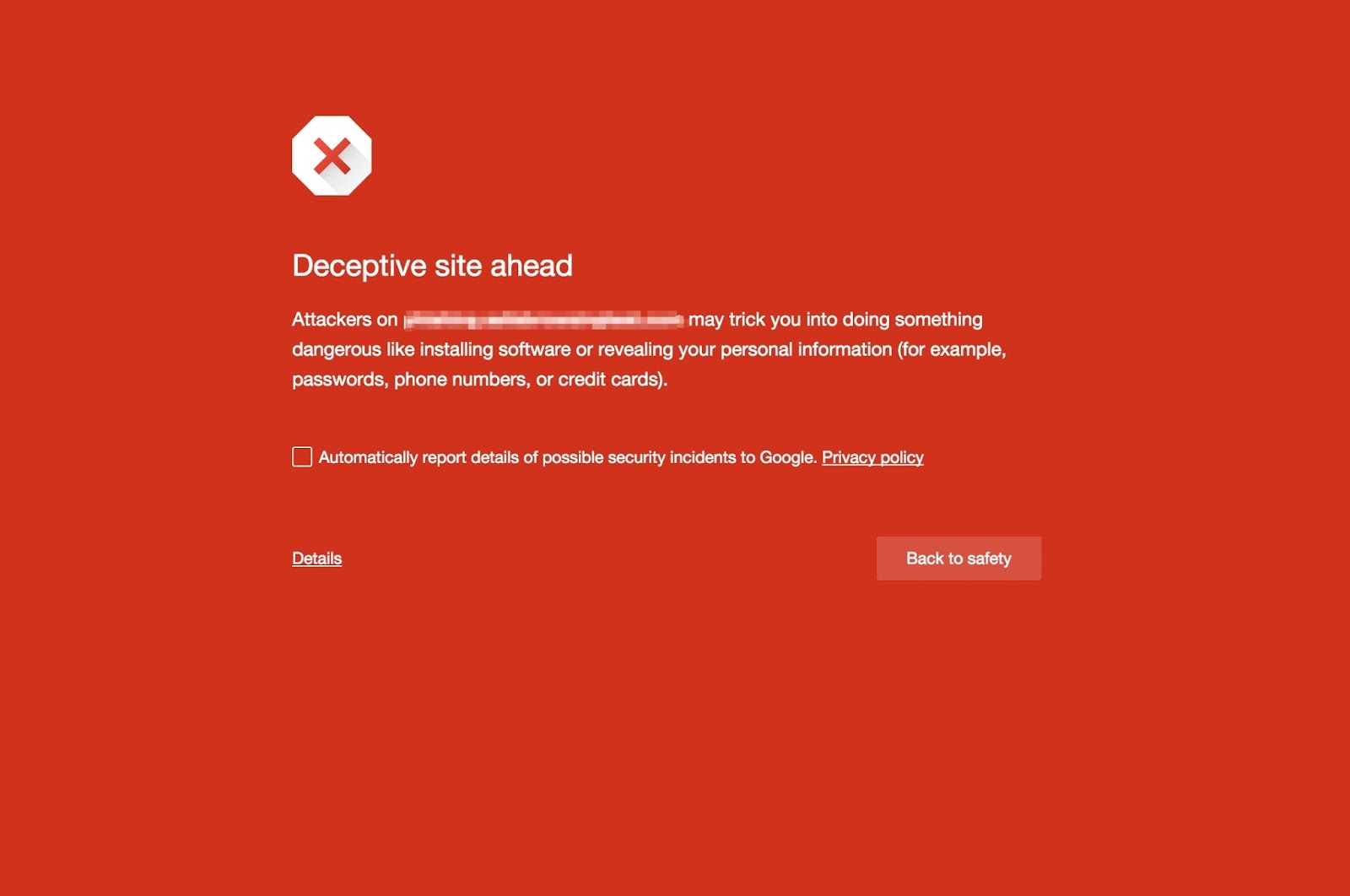
Consistent with the social engineering policy we announced in November, embedded content (like ads) on a web page will be considered social engineering when they either:
- Pretend to act, or look and feel, like a trusted entity — like your own device or browser, or the website itself.
- Try to trick you into doing something you’d only do for a trusted entity — like sharing a password or calling tech support.
Below are some examples of deceptive content, shown via ads:
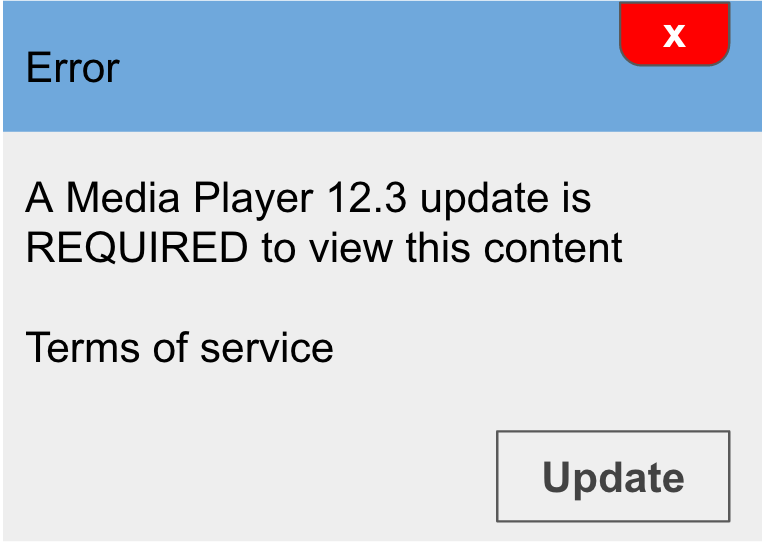
This image claims that your software is out-of-date to trick you into clicking “update”.

This image mimics a dialogue from the FLV software developer — but it does not actually originate from this developer.

These buttons seem like they will produce content that relate to the site (like a TV show or sports video stream) by mimicking the site’s look and feel. They are often not distinguishable from the rest of the page.
Our fight against unwanted software and social engineering is still just beginning. We’ll continue to improve Google’s Safe Browsing protection to help more people stay safe online.
Will my site be affected?
If visitors to your web site consistently see social engineering content, Google Safe Browsing may warn users when they visit the site. If your site is flagged for containing social engineering content, you should troubleshoot with Search Console. Check out our social engineering help for webmasters.
Posted by Lucas Ballard, Safe Browsing Team


Great Content ≠ Long-Form Content
Posted by randfish
[Estimated read time: 2 minutes]
Yes. I’ve read the studies. I know the correlations. Long-form content, on average, earns more engagement, higher rankings, and more shares than their more concise brethren.
Not sure where the idea that “great content” = “really, really long content” came from, but we need to dispel that myth.
— Rand Fishkin (@randfish) March 30, 2016
But, that does not make long-form content the same as great content.
It does not make long-form content the goal of every content effort.
It certainly does not mean that longer content is better content.
Confounding variables are, in my opinion, behind many of these correlations. Long-form content, at least the good stuff, intentionally targets searchers and browsers seeking lengthier, more comprehensive information. If you want to challenge those “longer content performs better on average” statistics with equally unapplicable numbers, check the data on diminishing attention spans, ever-increasing abandonment rates, and what percent of visitors actually read long content to its end.
The right content:
- Serves visitors’ intent by answering their questions and helping them complete their goals
- Delivers an easy, pleasurable, accessible experience on every device and every browser
- Gets the right information and experience to visitors FAST
- Does all of the above better than any of the competitors in the space
The phrase “great content” doesn’t mean “long-form” content. In fact, as Ronell Smith recently pointed out, “great content” doesn’t, universally, mean anything at all. Its definition is subjective and sometimes mythical when what we need are pragmatic, clear boxes to check to determine whether our content efforts are on track.
My proposal: rather than applying a tactic like long-form content universally or setting length as the bar (or even a metric) for greatness, we instead match our content to our audience’s needs and our business/personal goals. 700 more words will not help you reach your goals any more than 7 more words. Create content that helps people. Do it efficiently. Never write an ultimate guide where a single image could more powerfully convey the same value. Trust me; your audience and your bottom line will thank you.
P.S. If you’re seeking some examples of long-form, short-form, interactive, visual, and even single-blog-post content that I think fits with the philosophy above, check out my list of 10X Content and Ross Hudgens’ recent list of content marketing examples. Both have lots of short-form excellence included.
p.p.s Buzzsumo put out this superb piece on how IFL Science does masterful short-form content. They showed that IFL actually does far better with their short, <1,000 word posts, than with their longer ones.
Sign up for The Moz Top 10, a semimonthly mailer updating you on the top ten hottest pieces of SEO news, tips, and rad links uncovered by the Moz team. Think of it as your exclusive digest of stuff you don’t have time to hunt down but want to read!
Examining Traffic From Google’s AMP Carousel
On April 4th I noticed we were seeing some growth in traffic to one of the AMP versions of our posts. A quick check in analytics revealed the AMP version of this post had indeed enjoyed an uplift in traffic. With a bit more digging I found Builtvisible ranking Google’s AMP carousel for “Google”. I […]
The post Examining Traffic From Google’s AMP Carousel appeared first on Builtvisible.
Act now: SMX Advanced super early bird rates expire this Saturday
SMX Advanced rates increase Saturday. Register now for the lowest rates. Here’s what’s in store: 30+ sessions, keynotes and workshops featuring results-producing strategy and tactics on paid search, SEO, analytics, mobile and social media; panel discussions, single-speaker TED-style presentations…
Please visit Search Engine Land for the full article.
SearchCap: Google penalties, Google appeals & more
Below is what happened in search today, as reported on Search Engine Land and from other places across the web.
The post SearchCap: Google penalties, Google appeals & more appeared first on Search Engine Land.
Please visit Search Engine Land for the full article.
Google Swats Unnatural Outbound Links With Latest Round of Manual Actions
Bloggers are feelin’ the pain after this weekend when Google sent out a new round of manual actions punishing unnatural outbound links.
read more
21 Free Tools to Develop Your Content Marketing Strategy
Tools, tools, and more tools. From email marketing to social media management to content creation—you can find a tool for whatever ails you. But when you’re pressed for time and money, the last thing you want is a laundry list of expensive tools that you MUST HAVE or CAN’T LIVE WITHOUT. That’s why I’ve compiled […]
The post 21 Free Tools to Develop Your Content Marketing Strategy appeared first on Builtvisible.
Google Accelerated Mobile Pages and content: the need for speed
When Google launched the mobile update in April 2015, it was intended to reward brands with mobile-friendly websites. Even without the update, … read more