Programming Note: Offline Tomorrow Thursday & Friday For Passover 5780
This is a programming note that I will be 100% offline the next two days, Thursday April 9th and Friday April 10th, for the Passover holiday. This year I decided not to schedule any stories or videos. I won’t be back online until late Saturday night …
5 Elements of a Hyper-Effective Content Calendar
Content calendar can be a powerful tool in your marketing operations, but only if you get it right. Here are 5 essential ways to make it work.
Post from Marijana Kostelac
Pick up the phone, Neo. Why Call Analytics Is One of the Most Underrated Marketing Strategies.
Take the red pill and download our free guide to understand call analytics use cases, benefits and key vendors to drive inbound call revenue.
Please visit Search Engine Land for the full article.
Video: Alexis Sanders on SEO strategy and how to test your SEO
Check out this super smart SEO on how she manages her clients SEO strategies and then measures its success.
Please visit Search Engine Land for the full article.
Showcasing the value of SEO
Each year we attend dozens of events and reach thousands of people with our keynotes, talks, and Q&As. We go to conferences and meetups, because we believe that our talks can potentially help online businesses flourish and we get to help people with their search related problems, but sometimes also listen to their success stories. It’s really uplifting when we hear that, by following our advice, they achieved something great!
We want people to hear about these success stories, so we’re starting a new blog post series that features case studies. They may, for example, help with convincing a boss’ boss that investing in SEO or implementing structured data can be good for the business.
In this first blog post we’re going to start with the overall basics of investing in Search Engine Optimization (SEO), and how investing in it helped a company.
We hope you’ll find this blog post useful. If you’re interested in contributing a case study, submit a talk proposal when signing up for a Webmaster Conference near you and we will consider featuring it. For more case studies and help content, head over to our developer site, help center, or YouTube channel. If you wanna get in touch with us, find us on Twitter.
Posted by Alice Kim and The Gary
Moon Tae Sung is a SEO Manager at Saramin, one of the largest job platforms in Korea. We had the opportunity to ask him a few questions about the effects of his team’s work on Google Search after a presentation he did at a Webmaster Conference in Seoul.
Saramin offers job posting recommendations, company and salary information, AI-based interviews, and AI-based headhunting services. According to Tae Sung, “people come to the Saramin site not only to look for jobs and submit applications, but to also gain a variety of information related to job searches and receive high-quality AI-based services for interview preparation.”
Saramin’s SEO process started with Google Search Console. In 2015 they verified the site in the tool and spent a year identifying and fixing crawling issues. “The task was simple, but still resulted in a 15% increase in the organic traffic“, Tae Sung said. The ROI prompted Saramin to invest more in SEO with the aim of even greater potential success. But first they needed to learn more about what else makes a site search engine friendly so they can better look for help resources. “We studied the Google Search developer’s guide and Help Center articles. These resources continue to provide up-to-date information for issues that we run into“, he told us.
SEO is a process that may take time to bear fruit, so they “started following the SEO guidelines more closely and implemented more changes. The goal was to make changes to the site so that Google Search would better understand it”, Tae Sung shared. They removed meta tags that were cluttered with unnecessary and unhelpful keywords, they used rel-canonical and removed duplicate content, and they explored the search gallery and applied applicable structured data, starting with Job Posting, Breadcrumb, and Estimated salary.
In addition, they used various Google tools offered as they worked on improving their site. “Errors on our structured data are dealt with by checking URLs on the Structured Data Testing Tool. Other tools like Mobile Friendly Test, AMP Test, and PageSpeed Insight provide us valuable insights for making improvements and helping us offer a better experience for our users,” said Tae Sung.
Over time, Saramin saw the red-colored errors on Search Console’s Index Coverage report gradually turning valid green, and they knew they were headed in the right direction. The incremental changes reached a tipping point and the traffic continued to rise at a more remarkable speed. In the peak hiring season of September 2019, traffic doubled compared to the previous year.
“We are very happy about the traffic increase, but what’s more exciting is it also accompanied improvement in the quality of the traffic. We saw a 93% increase in the number of new sign ups and a 9% increase on the conversion. We believe this means Saramin’s optimization work was found delightful by our users,” said Tae Sung.
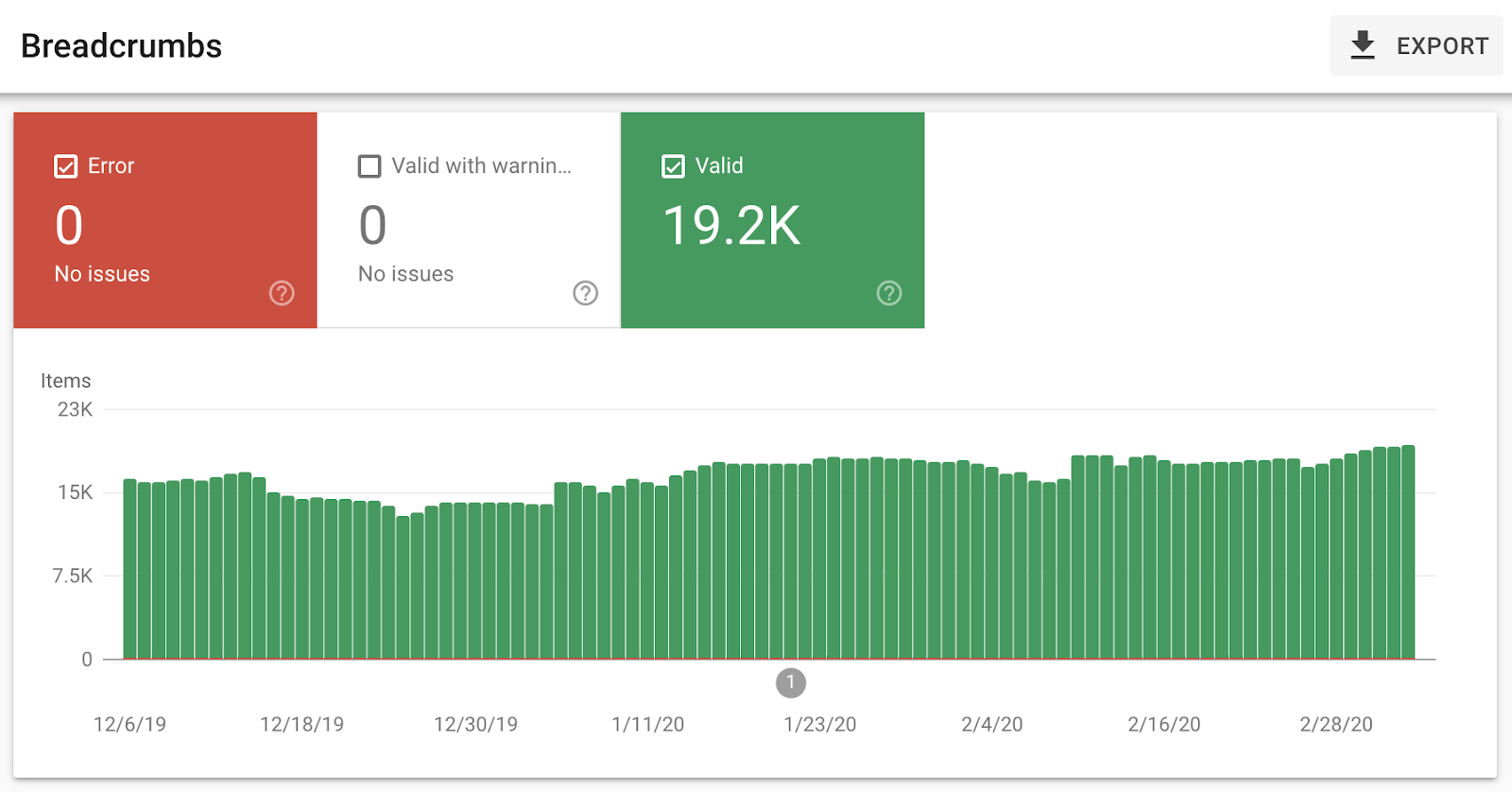

Saramin continues to invest in achieving their SEO goals. They’re trying to enhance their users’ experience by implementing more technologies and features from Google, and Tae Sung is enthusiastic about their work ahead: “This is only the beginning of our story.”


Why and How to Bring Empathy Into Your Content
Posted by DaisyQ
Creating content can feel incredibly difficult right now. If you’re like me, you’ve spent the last few weeks oscillating between a can-do approach and hours of staring into space. Here’s how to tap into those very real emotions and channel them into more impactful content.
What empathy is and isn’t
We commonly confuse sympathy with empathy. Sympathy is understanding and perhaps feeling bad for the struggles that someone may be experiencing. Empathy means understanding the person’s feelings and thoughts from their point of view. Sympathy is when you feel compassion, sorrow, or pity for what the other person is going through. Empathy is about putting yourself in their shoes.

In this post, I focus on cognitive empathy, which is the ability to understand how another person may be thinking or feeling. Cognitive empathy helps communication by helping us convey information in a way that resonates with the other person.
Feelings, who needs ’em?
I’ve always struggled with how to deal with my emotions. For much of my life, I thought that I needed to keep how I felt under wraps, especially at work. I recall tough days when I Googled reasons to get out of bed, and when I reached my desk, I would try to leave my emotions at home and just focus on working. Sometimes, the office felt like an escape. But usually, pretending to be unfeeling was a difficult if not impossible task. When this strategy backfires, our feelings overrule us. I’ve come to embrace the fact that emotions are what make me whole and human.
There’s a lot going on, and we’re all grappling with it
Creating marketing content can be incredibly hard right now because there is just so much going on — not only in your mind but in your readers’ minds, too. Rather than shy away from the current emotional challenge, embrace it to transform your work and get more joy out of the content creation process.
People are looking for information, and depending on your industry, there may be several content opportunities for you to dig into. Or maybe you are in an industry where it’s business as (un)usual, and you have to create email newsletters or blog content like you always have.
Whether you sell industrial components to obscure parts of machines or homemade broths, there’s room in your content for empathy. For example, are you creating a blog post on how to work from home? Think about the parent who’s never had to juggle homeschooling their kids while holding conference calls. Are you writing about cyber threats and the need to protect firmware? Think about how the risk of a cyberattack is the last thing a dispersed IT team wants to deal with right now.

Your readers are all grappling with different issues. The ability to convey empathy in your writing will make your work much more captivating, impactful, shareable, and just plain better — whether we’re dealing with a pandemic or not.
Do I have to pretend to be a mom now?
No, you don’t. In fact, pretending can come off as disingenuous. You are not required to have the same lived-in experiences or circumstances that your reader does. Instead, just try to understand their perspective.
See if you can tell the difference between these messages:
“Chin up! It’s hard, but I’m sure it will get better.”
“I know everything looks bleak right now, but you will get through this.”
While there is nothing wrong with the first sentence in the above example, the second sentence comes across as more caring and compassionate.
Done well, empathizing can make it easier to understand the challenges, frustrations, fears, anxieties, or worries your readers might be experiencing.
How to infuse content marketing with empathy
Empathy is a skill. Those who master it gain the ability to create content that not only addresses a surface problem or issue, but also hits a deeper level by accessing the perspectives and emotions involved.
Picture the person reading
Want your readers to take action? Try to understand them.
Take your health, for example. Pretty much any advice given by your doctor would be critical, right? Yet we often struggle to implement it. Why is that? One reason could be empathy. Studies show that better health outcomes result when a physician shows empathy towards their patient.
Are you trying to incite action with your post? Maybe you want your readers to do more than just read your blog and carry on with their lives, then seek to understand where they are coming from first. Whether you’re creating a blog post or a video, picture the person who will read or watch what you are sharing, and speak directly to them. Better yet, find an image of someone that represents your intended audience online and pull it up while creating. Make your audience real. In turn, your content will become more productive because a reader who feels understood is more likely to apply what they read.
This tactic works for me when I have to create a how-to video or break something down. I pick an image from the web and ask, “Would they get it?”
Set a goal for your content
Creating content can be a slog. Setting an intention is one of my favorite ways to give purpose to my process. It helps me push through the mornings when I don’t care about finishing that first draft. I like to think about where I want to take the audience, then revisit that goal again and again until the project is complete.

For example, the goal of this blog post is:
To help business owners and marketers who need to send out emails or write blog posts while we’re dealing with a pandemic. It’s not business as usual, and empathy is what we need now more than ever. I will share why empathy works, and give practical tips on how writing in a more relatable, humane, and approachable way can help get the point across.
When I start a new post, I print a paragraph like this right at the top of my word doc. I revisit it multiple times while I’m writing and reviewing the draft. Then, I delete it right before I submit the post. Moment of truth: Does the post stand on its own? Does it express what I need to say? If so, I know it’s ready.
Share personal stories or anecdotes
I read a story by Leo Tolstoy recently that really stuck with me— in fact, the ending haunted me for a while. It was a story about greed titled, “How Much Land Does a Man Need?”
Tolstoy could have written an essay on how greed is wrong, but I probably wouldn’t have remembered it. Instead, I can vividly recall the farmer who dies during the struggle to get one more foot of land even though he has more than enough already.
Personal stories give meaning to your work, and you don’t need to travel to a Russian prairie to find examples. There is material in your everyday life that you can put onto paper. Think of childhood memories, past events, relationships — heck, your favorite passage from a book. How can you weave these into your narrative in a way that will connect with the reader? How can you share a tidbit from your personal life that will pull your readers in?
The ultimate question is: Who’s your audience? Once you know that, you’ll know what to share.

If you have to write about budgeting tips, put yourself in your reader’s shoes. Think back to a time when you had to watch where every dollar went. How did you cope? What resources did you use? Relate that to what your reader’s budget struggles may be today. How can your experiences help you empathize with a mom in a single-income household who now has to file for unemployment? Or the business owner who needs to re-shuffle a budget and maybe cut ancillary services? You don’t have to be in their position to appreciate what they are going through.
Think less self-promotional and more educational
Have you ever gotten to the end of a blog post and wondered why you bothered reading at all? That writer probably made an impression on you, and it wasn’t great.
Reward the reader by giving them something actionable. Help them achieve a goal they have, or include something worth retelling that’ll impress their boss, friends, or spouse. Look beyond what you’re immediately selling and appreciate how it relates to the bigger picture. Even an external hard drive or a peppercorn grinder can take on new meaning when you look at it from this perspective.
Perhaps that external hard drive is not just gigabytes but a way to digitize a family album to share with distant relatives. Or for the budding YouTuber, it may be a way to store all their outtakes without slowing down their computer. Show them how they can get more storage space or pick the best product for their needs. How can they use your advice to live their best life?
Learn from the masters
Put down the business book and try fiction.
As marketers, we can get stuck in a cycle of reading marketing content. I have at least 12 books that I could (and should) be reading instead of a Hemingway classic. But reading non-marketing materials will improve your empathetic skills by demonstrating how storytelling works.
I’m halfway through “A Farewell to Arms”, and I think the point of the story is that wars are long and pointless. I could be wrong, but I haven’t stopped reading it yet. That’s the key — the narrative is carrying me along. I’m invested in the characters and their endings. I want to find out what happens to Catherine Barkley because I empathize with her.
If you want to kick it up a notch, learn from works like Stephen King’s “On Writing” or Joseph Campbell’s “The Hero with a Thousand Faces”. These classics pinpoint principles of narrative that work consistently across time and space. They’re as relevant and essential as ever, and they can inform, strengthen, and enliven your content. Bonus: maybe they’ll inspire you to write that novel someday.
Creating content with empathy helps you and your readers
Really good content makes us feel something. It’s a feeling that sticks with us long, long after the words have escaped our minds. That’s the kind of impression you can leave in your readers’ minds, but not without getting to know where they are coming from. Simply stating numbers and stats and figures won’t cut it. We don’t operate in a vacuum. Our relationships with people, our shared experiences, and our connections are what drive us, and in times like this, that doesn’t change. Let it be the glue that helps you bond with your audience.
Sign up for The Moz Top 10, a semimonthly mailer updating you on the top ten hottest pieces of SEO news, tips, and rad links uncovered by the Moz team. Think of it as your exclusive digest of stuff you don’t have time to hunt down but want to read!
Asked Google: Does Searcher Behavior Changes Influence Overall Ranking
A week or so ago, I asked Google’s John Mueller in a video hangout if it is possible that the changes in searcher behavior we are seeing are influencing the overall Google search ranking algorithm. We have been seeing a lot of fluctuations in Google se…
Google Tests Moving Review Stars Lower & Changing Colors
Google seems to be testing moving the review stars from just under the title to below the description portion of the snippet. Google is also testing changing the color from orange to yellow. Here are screen shots I was able to replicate but I am not t…
Google Ads New Chart Types For Time Series & Summary
Google Ads seems to have launched new chart type options in the Google Ads interface. When you click on it, Google gives you options for either a time series or summary chart. Here are screen shots from Jessica Budde and Jeremy Krantz.
Google Tweets Its Search Changes For COVID-19
The Google Search Liaison account on Twitter posted several tweets summarizing many of the changes Google has made to search over the COVID-19 crisis. We covered many of them here, actually, all of them. But I thought it would be good to share these t…
Google Search COVID Announcements Will Be Live Soon
A week ago we we reported that Google has new structured data named SpecialAnnouncement that some sites can use to markup their Google search results. Well, Google didn’t write a blog post about it until Friday afternoon and it isn’t live yet. Danny …
The best-kept secret to maintaining and defending the top spot with paid search
Pumping more money is not the solution. BrandVerity’s CEO helps you learn the essential techniques to maintain your position one in paid search listings.
The post The best-kept secret to maintaining and defending the top spot with paid search appeared first on Search Engine Watch.
Digital Marketing Checklist Template: Business Impact of COVID-19
This post was written by Molly Quinn & Rebecca Kilcoyne
Once stay at home orders went into effect to help stop the spread of COVID-19, consumer behavior and client priorities shifted seemingly overnight, making us rethink our strategy and timing of analyses.…
The post Digital Marketing Checklist Template: Business Impact of COVID-19 appeared first on Seer Interactive.
How dark UX patterns are ruining brand loyalty among UK consumers
Have you ever found yourself subscribed to a newsletter you never actually subscribed to? That’s part of the dark UX patterns. Dig in for insights.
The post How dark UX patterns are ruining brand loyalty among UK consumers appeared first on Search Engine Watch.
Blocked From Amazon FBA? Here Are 3 Tips for Getting Your Products to Customers
Businesses and Customers Alike Rely on Amazon
Not only do businesses rely on Fulfillment by Amazon (FBA) to get their products to customers, but customers rely on Amazon to get the products they need in a timely manner.
ICYMI: On Tuesday, 3/17 Amazon a…
Google introduces new COVID-19 and Telehealth GMB links for healthcare providers
These new links are part of the company’s larger effort to make healthcare information more accessible through Google Search.
Please visit Search Engine Land for the full article.
Pinterest boosts ability to ‘Shop’ for in-stock home decor and fashion products
The company says more users are engaging with shopping on Pinterest and traffic to retailers has more than doubled in the past year.
Please visit Search Engine Land for the full article.
Leveraging Custom Labels in your Shopping Feed
What are Custom Labels?
Custom Labels are blank fields within a Google Shopping feed that allow retailers to organize Shopping campaigns based on product groupings. While basic feeds contain generalized product attributes such as product type, brand, and size, custom labels allow for efficient product groupings to better allocate spend and increase ROI long term.…
The post Leveraging Custom Labels in your Shopping Feed appeared first on Seer Interactive.
From “Green” to Great: Your First Year in a Marketing Agency
The Top 5 Things You Must Focus on in Your First Year

Photo by Markus Spiske on Unsplash
First, let me start by saying congratulations! Landing your first full-time marketing position is one hell of an accomplishment. It is no easy feat.…
The post From “Green” to Great: Your First Year in a Marketing Agency appeared first on Seer Interactive.
SEO will be a primary focus for marketers during the downturn, says survey
Respondents said SEO was their top performing channel last year and is more likely to be maintained going forward.
Please visit Search Engine Land for the full article.