
Definition: Agentic SEO is the evolution of search strategy from manipulating outdated SEO tactics to proactively structuring factual, consensus-driven, reputation-based “ground truth” for generative AI comprehension (a process known as Answer Engine Optimisation).
It leverages autonomous, multi-agent workflows and creative inference to conduct deep research and construct massive, verified factual corpora (Super Topicality), effectively forcing AI answer engines to treat the target entity as the unassailable, canonical source of truth within its niche for topics it demonstrates unassailable experience in.
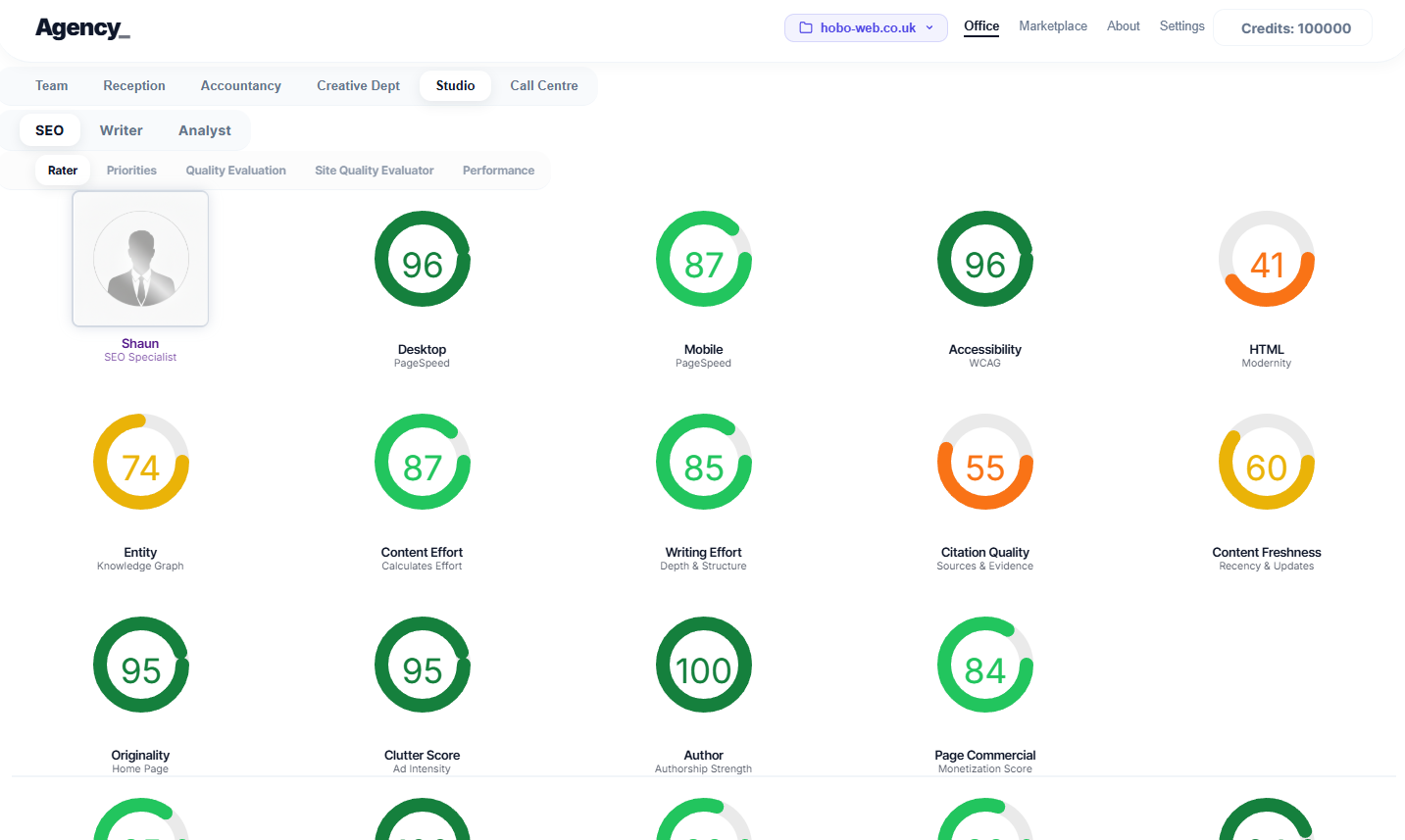
Beyond Keywords: Mastering Inference Optimisation with the ‘Agency’ Platform
For the past two decades, Search Engine Optimisation (SEO) was primarily built around a singular premise: convincing an algorithm to rank a webpage in a list of ten blue links. However, as search engines evolve into generative, AI-driven answer engines, the rules of visibility have fundamentally changed.
Enter Agentic SEO – the evolution of search strategy from manipulating keyword densities to strategically structuring facts for AI comprehension. It is the architectural practice of building unquestionable digital authority using autonomous, multi-agent workflows.
To understand the mechanics of Agentic SEO, we look at my own Agency platform – an agentic operating system built specifically to execute these advanced methodologies at scale.
From Keywords to Inference Optimisation
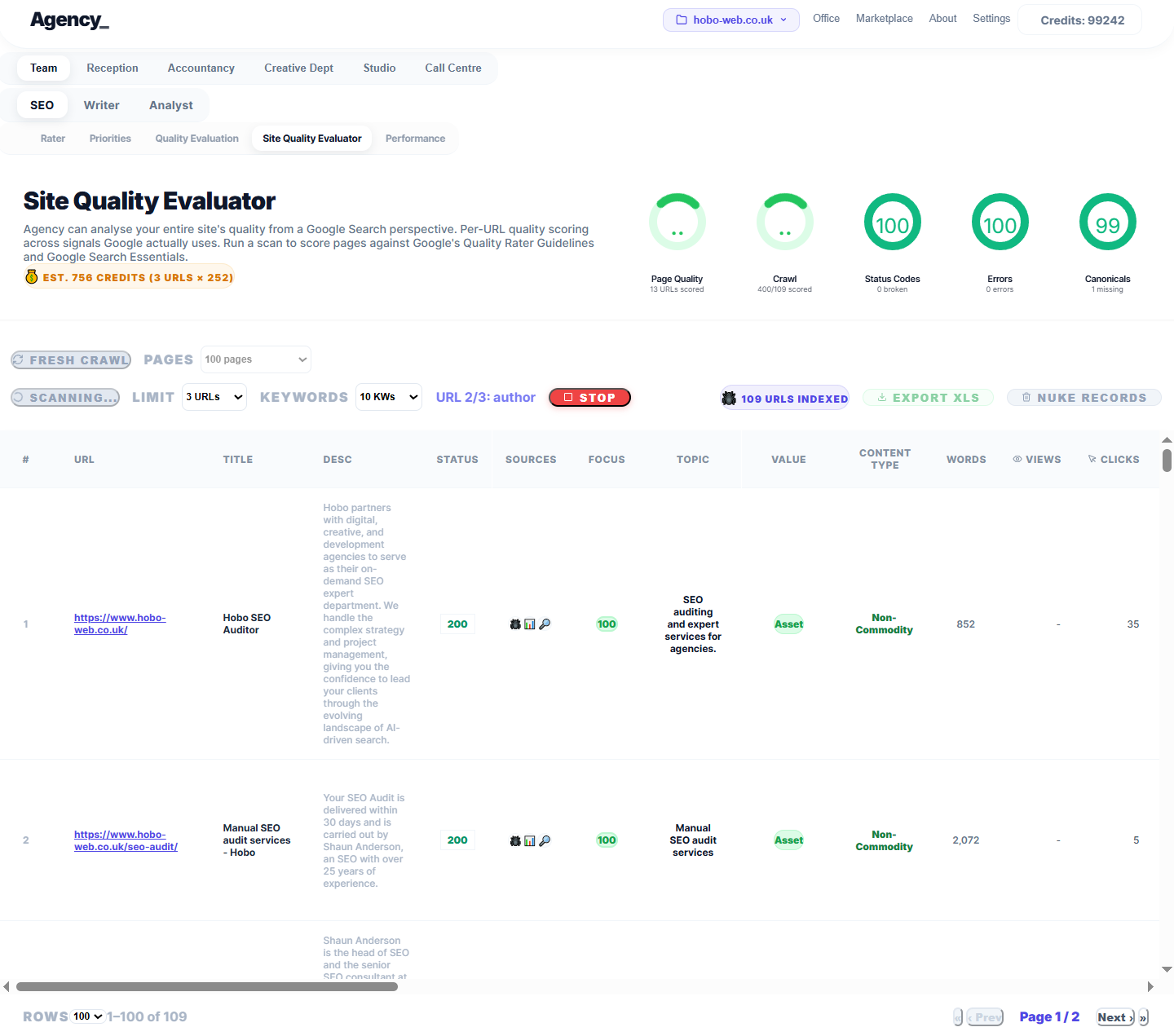
At the heart of Agentic SEO is a process of Inference Optimisation. Modern AI search engines (like AI Overviews, ChatGPT, and Claude) do not just index text; they build internal knowledge graphs and infer answers based on the “ground truth” they find.
Agency tackles what I called in my ebook, the Synthetic Content Data Layer Opportunity Gap. I know, I just named these things as I came across them. They are fully descriptive terms, if not snappy.
This is the urgent void in an AI model’s internal knowledge regarding an entity. If you do not proactively fill this void with verified, structured facts, competitors, hallucinations, or negative sentiment inevitably will.
Agentic SEO executes Canonical Source Construction. By deploying teams of AI researchers and writers to publish rigorously verified, deeply compiled factual corpora, an entity effectively forces the AI ecosystem to treat it as the singular, unassailable source of truth.
Deep Research Over “AI Slop”

When generative AI first emerged, the web was flooded with thin, regurgitated content. Agentic SEO inherently fights this dilution.
Through Agency’s multi-agent workflows, content creation is not a simple “prompt-to-publish” action. It utilises specialised data engines to autonomously – using officali api data sources – discover, process, and statistically analyse the highest-ranking competitive content before drafting begins.
This mirrors what leaked algorithmic documentation suggests Google actively measures: Content Effort Score.
Algorithms are designed to reward demonstrable human-level research and original thought over AI-spun filler.
By using a “Marketing Cyborg” technique – where human experts set the overarching strategy and multi-agent teams execute the exhaustive research and drafting – Agentic SEO consistently produces high-effort, high-information-gain content suitable for certain types of consumerism.
The Rater Engine & The Q* Master Score
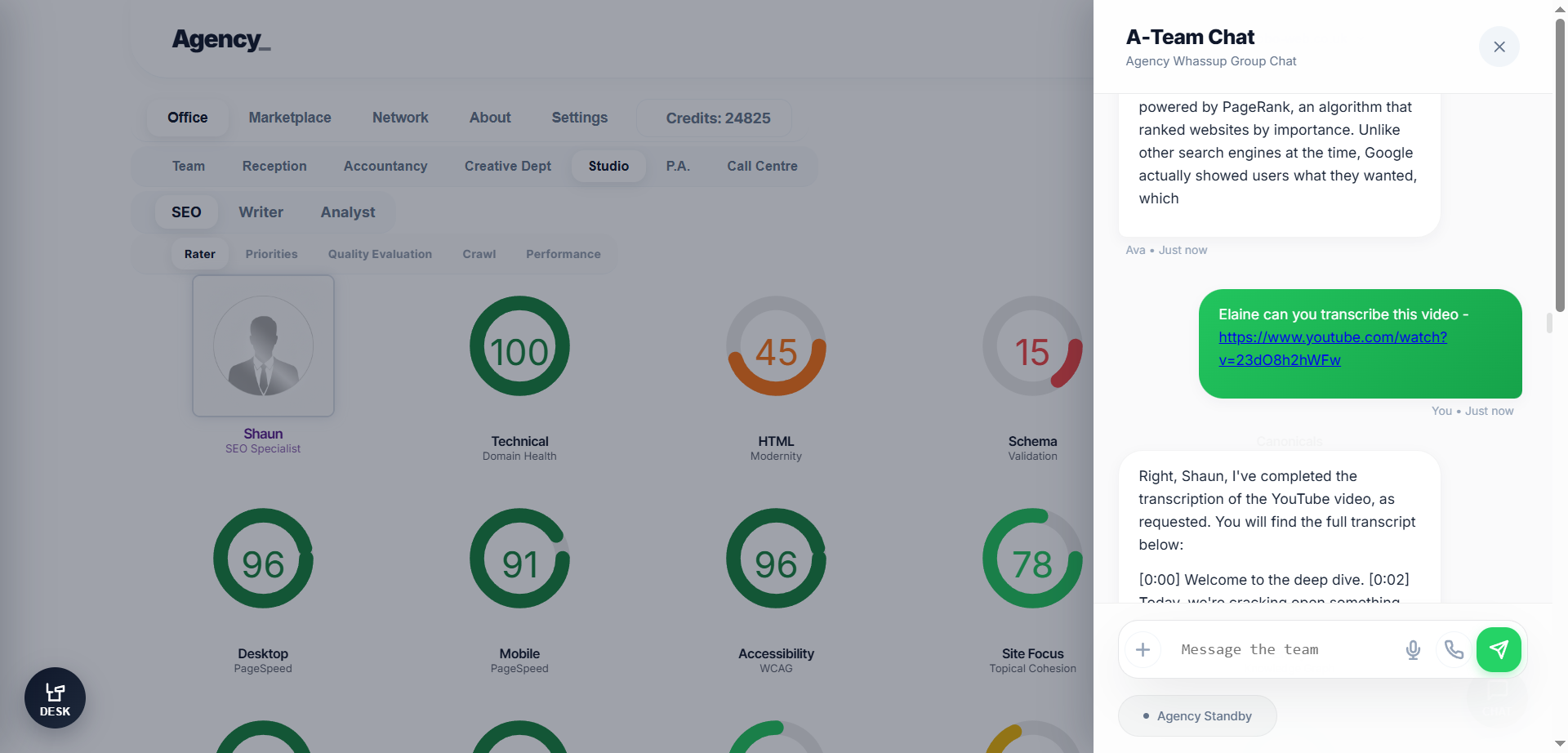
Agentic SEO does not operate on guesswork.
It relies on relentless, automated auditing against known algorithmic realities. Agency evaluates web properties through its Rater Engine, a diagnostic system featuring 35 unique dials that audit a site’s footprint.
Crucially, these dials are not arbitrary. They are reverse-engineered from four foundational pillars:
-
- Google’s Quality Rater Guidelines (QRG): Direct rules on E-E-A-T (Experience, Expertise, Authoritativeness, and Trustworthiness) and YMYL (Your Money or Your Life) sensitivities.
- The 2024 Google Content Warehouse API Leak: Internal attribute tracking that exposed metrics like sitefocus, siteradius and contenteffort.
- DOJ Antitrust Trial Testimony: Sworn statements confirming how click-data and site-quality assessments interact.
- Decades of Strategic SEO Research: The most relevant being my free ebook, Strategic AI SEO and wider Quadrilogy series.
These dials – covering metrics like SiteFocusScore, Legitimacy (Inverse Scamness), Author Strength, and HTML Modernity – culminate in the Q* Master Score.
Because search algorithms are actually a collection of competing search philosophies, the Q* Score is a composite index.
It measures how successfully a site survives all of these competing algorithmic lenses simultaneously.
Super Topicality: Creating a Gravity Well
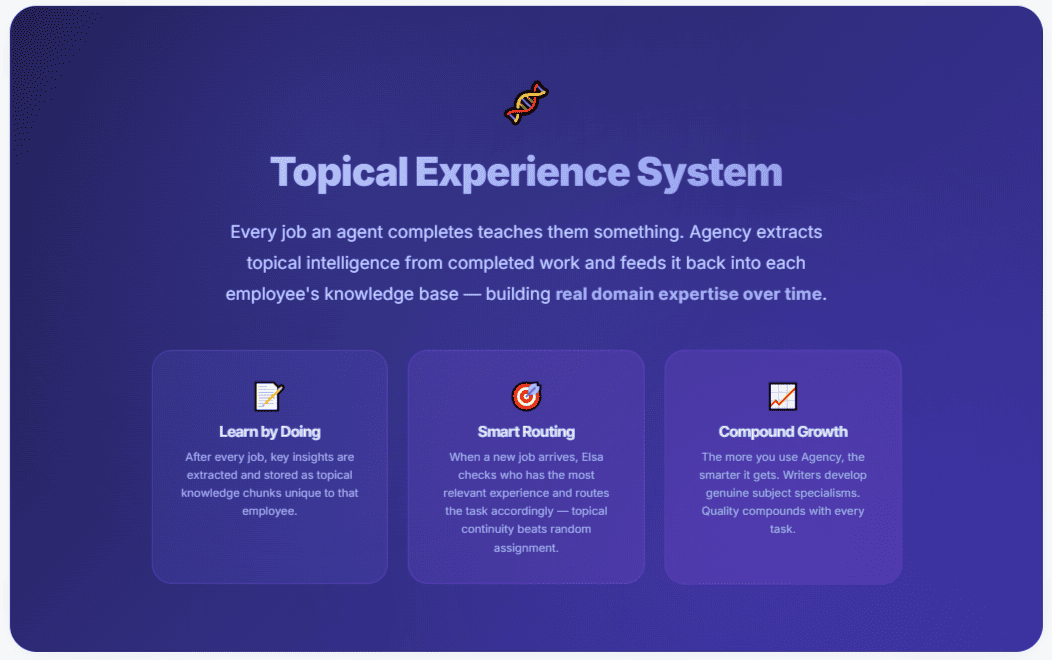
Traditional SEO often focuses on winning a handful of high-volume keywords. Agentic SEO, by contrast, pursues Super Topicality.
By utilising autonomous agents capable of operating at a massive scale, a brand can systematically cover the infinite long tail of a subject. This exhaustive, deep factual compilation creates a localised “gravity well” of algorithmic authority. When an AI attempts to understand the nuances of that specific niche, it is continually drawn back to the brand’s comprehensive corpus.
The Expertise Economy
Finally, Agentic SEO recognises that true strategy cannot be reduced to a simple prompt. Within Agency’s marketplace, real-world SEO veterans encrypt and encapsulate their proprietary methodologies into digital “Skills.”
Users can hire these “Silver” or “Gold” digital employee clones to run workflows inside their own environments. The agentic system executes the battle-tested strategies of industry leaders, proving that the future of SEO is not generic LLM logic, but the scalable deployment of true human expertise via autonomous agents.
Conclusion
Agentic SEO is the end of shortcuts. It is the rigorous, programmatic structuring of truth, expertise, and digital authority. By utilising systems like Agency to orchestrate deep research, enforce uncompromising quality control, and achieve Super Topicality, brands are no longer optimising for a search engine – they are becoming the underlying truth the AI engines rely upon.
Agentic-First HITL.
— Shaun Anderson (@Hobo_Web) April 30, 2026
Definition: A Human in the Loop doesn’t use tools anymore. Your agent does. You train your agent. You codify your philosophies. You don’t prompt. You manage an Agency. Your domain rich agent works for you.
I wish you good fortune in the clone wars to come.
Read Next: Find out just who is an Agentic Agency for?
FYI: I asked Claude Opus 4.6, “So, answer the question, does this page reflect the source code?“: Answer: “Yes — the updated article accurately reflects the source code. Every claim maps to a verifiable implementation. Nothing overstated, nothing missing.” Disclaimer: Agency is a simulation. AI is a simulation! Some people think you are a simulation. Not many people know this aspect of AI. AI cannot do a lot of things people say it can do. For transparency, I need to say it is a simulation. For instance, I have an accountant baked into Agency. I am not an accountant, though, and neither is AI. This data should be reviewed BY YOUR REAL ACCOUNTANT, with the point being you have saved a lot of time collecting, sorting and reviewing the data before the real accountant reviews it. That is the essence of Agency. It is the essence of AI HITL Marketing. AI does the grunt work, the CEO signs the job off, and publishes under their credentials. This article was created using Grok, CLaude and Gemini to give a thoughtful, transparent overview of what Agency, and Agentic systems like it represent over the coming year. For me, at this point, the cyborg apparatus I predicted in my AI SEO ebook last year is now effectively built, and it is just a job of making it slicker and ensuring it is wielded correctly and responsibly by the user. Update: A similar framework to Agency has been described in a recent paper from Google.