
Ahrefs Domain Rating (DR) is a useful metric for anyone navigating SEO (search engine optimisation).
If you are a business owner, marketing professional, or SEO specialist, understanding DR is paramount for assessing website authority and competitive landscapes. This proprietary metric from Ahrefs (I have no affiliation) offers a numerical representation, on a logarithmic scale from 0 to 100, of a website’s overall backlink profile strength.
A higher DR typically indicates a more robust and authoritative backlink profile, which often correlates with stronger organic search performance.
The metric provides a quick, at-a-glance evaluation of a domain’s link equity, helping you benchmark your site against competitors and identify potential link-building opportunities. Embracing its nuances is key to an effective SEO strategy.
It works a lot like the systems I have built in Agency, which is why it is perfect to be included in Agency, which it now is.
Deciphering the Ahrefs Domain Rating Calculation
Domain Rating (DR) by Ahrefs is similar to Domain Authority (DA) by Moz, the Semrush Authority Score, and Flow Metric Scores by Majestic. Ahrefs calculates Domain Rating (DR) by analysing several critical factors related to a website’s external backlinks.
The primary components include the quantity of unique referring domains linking to your site and the individual Domain Ratings of those linking domains.
The calculation also considers how many other unique domains these linking sites point to, which can dilute the link equity passed.
Importantly, only ‘dofollow’ links contribute to your DR score; ‘nofollow’ links, by design, do not pass link equity and are excluded from this calculation.
This comprehensive analysis allows Ahrefs to create a reliable indicator of a website’s perceived authority within its vast index of the web.
DR: A Powerful Indicator, Not a Google Ranking Factor
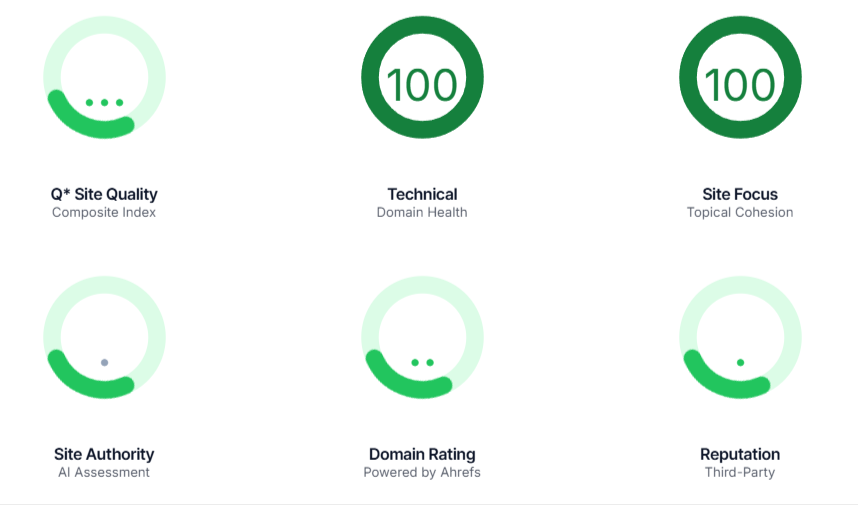
It is worth clarifying that Ahrefs Domain Rating, like Moz’s Domain Authority metric, is not a direct Google ranking factor.
“We don’t really have ‘overall domain authority’. A text link with anchor text is better though,” Gary Illes, from Google, said in 2015.
Google representatives have consistently stated that their algorithms do not incorporate third-party metrics like DR into their core ranking systems.
Your website’s visibility in search results is not directly dictated by this number. However, a higher DR often correlates strongly with better search engine visibility.
This is because a strong backlink profile, which DR measures, is a known and significant ranking signal for Google. Websites with numerous high-quality backlinks tend to rank better because Google views them as more authoritative and trustworthy.
Thus, while not a direct factor, improving your DR is a byproduct of effective link-building strategies that align with Google’s own quality guidelines. And do remember, Google does have a literal attribute (from the Google leak called SiteAuthority).
We often play a semantic word game in SEO when dealing with Google (although no one outside Google knows what siteAuthority itself measures, we can make a logical inference.
Recalibrations and Strategic Adaptations of DR
The SEO community experienced a significant shake-up with a major algorithm update to Ahrefs’ DR and URL Rating (UR) calculations, implemented on September 26, 2025.
This was not a system error but an intentional recalibration by Ahrefs, designed to enhance the accuracy of its authority measurement and combat previous instances of score inflation, as confirmed by Ahrefs.
The updated algorithm places considerably less emphasis on low-quality referring domains and applies stricter filters against spammy or manipulative linking strategies. This fundamental shift reinforced the paramount importance of link quality over sheer quantity, a principle echoed by various SEO outlets from October 2025 through February 2026, as noted by DashThis.
Many website owners observed sudden and significant drops in their DR scores during this period, prompting a re-evaluation of their link-building tactics. Ahrefs confirmed that a DR score can decline not only from losing high-quality links but also if linking domains themselves lose authority or if competitors accelerate their own link acquisition efforts.
As the Ahrefs Channel noted in a 2025 video: “The rapid evolution of SEO, particularly with the advent of AI, necessitates a continuous learning approach to effectively build and maintain website authority. Relying on outdated methods for link building and overall SEO strategy will likely hinder improvements in metrics such as Ahrefs Domain Rating, as the landscape demands constant adaptation.” This underscores the need for constant adaptation in strategy.
In April 2025, the Ahrefs Channel highlighted that SEO underwent more significant changes in the two years prior than in the preceding decade, suggesting that strategies for building website authority and improving metrics like Domain Rating must adapt to a rapidly evolving search landscape. In July 2025, the Ahrefs Channel further emphasised the need for new SEO tips and strategies specifically tailored for the ‘AI era,’ indicating that approaches to enhancing a website’s backlink profile and, consequently, its Domain Rating, need to integrate considerations for artificial intelligence’s impact on search, rather than relying on recycled advice.
Ahrefs continuously refines its data processing; currently, the Domain Rating is updated every 12 hours.
Furthermore, in May 2026, Ahrefs began updating its crawler scheduling system to prioritise valuable pages over spam, indirectly contributing to the precision of its DR calculations. This continuous refinement underscores the need for ongoing, quality-focused link-building efforts rather than short-term tactics.
Understanding the Logarithmic Scale Ahrefs uses in DR
Ahrefs Domain Rating operates on a logarithmic scale, meaning that the effort required to increase your score becomes significantly greater as you climb higher. For instance, improving your DR from 20 to 21 is considerably easier than moving from 70 to 71. This is a bit like how PageRank works.
Achieving higher scores demands an exponentially larger number of high-quality backlinks.
This characteristic highlights that improving your Domain Rating is a long-term endeavour, necessitating consistent effort and a patient, strategic approach to link building. There is no quick fix; it is a gradual process of earning trust and authority over time.
DR in Context: A Holistic View of Website Authority
While Ahrefs Domain Rating is a powerful metric, it should be interpreted within a broader context, not as an isolated measure of a website’s overall value. It is best utilised as a relative and benchmarking tool to compare your performance against direct competitors rather than an absolute indicator of your website’s intrinsic worth.
Ahrefs’ internal data in 2026 continues to show a strong correlation between a high Domain Rating and achieving top-three Google rankings for competitive keywords, as discussed by Search Engine Journal through June 2026. This underscores its predictive power when used correctly.
DR differs from Ahrefs’ URL Rating (UR), which measures the backlink strength of a specific page, or Moz’s Domain Authority (DA), which aims to predict overall ranking potential by considering a wider array of factors. Focusing solely on DR can be misleading; a high DR without corresponding organic traffic can indicate manipulative link practices, which Ahrefs periodically identifies and devalues through algorithm updates.
The industry’s shift towards using DR as a comparative tool acknowledges its dynamic nature and the normalcy of fluctuations driven by internal efforts, competitor activities, and Ahrefs’ ongoing recalibrations.
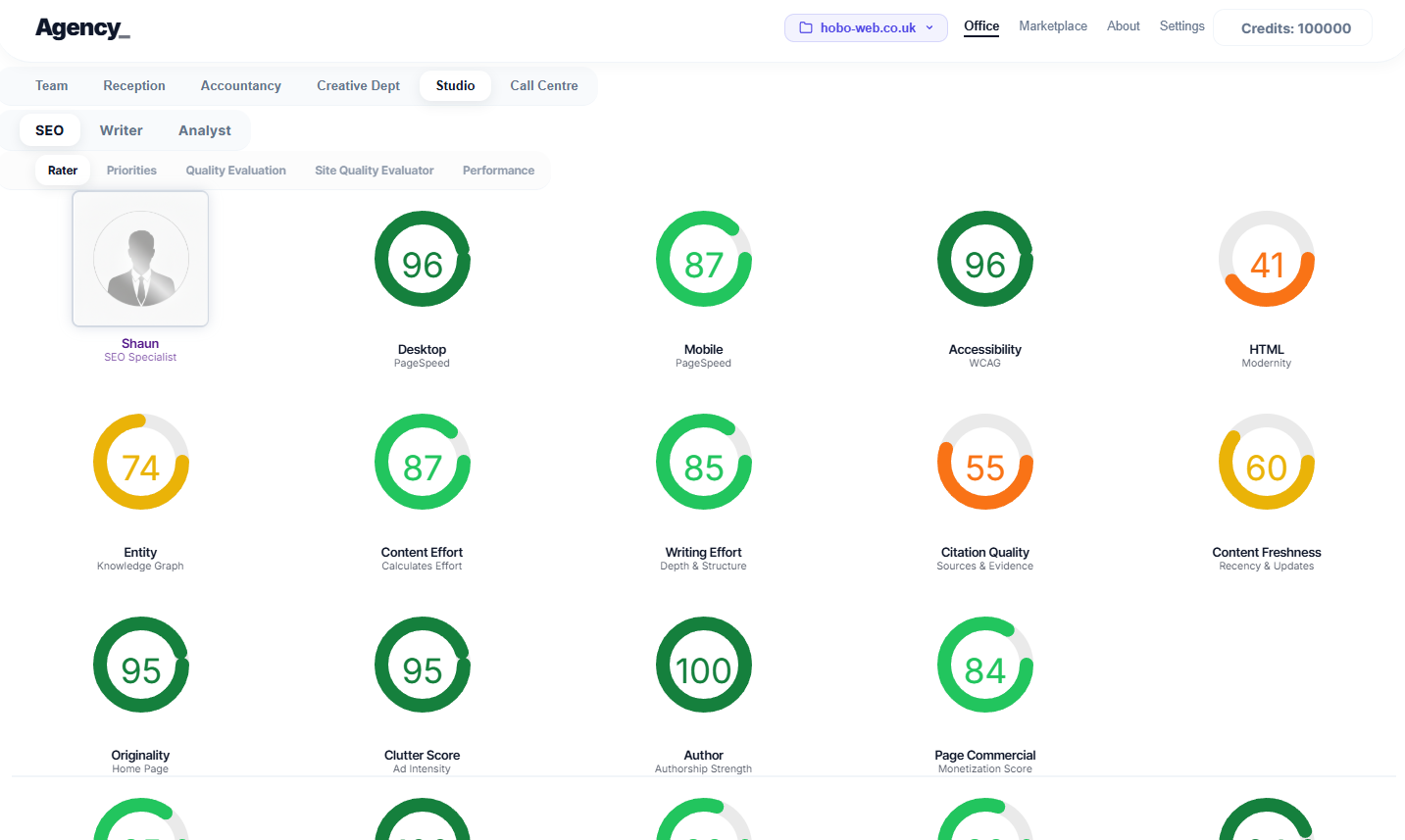
Always consider topical relevance, content quality, and potential traffic when evaluating a linking domain, not just its DR score, to get a true picture of its website authority. I think it is a great addition to Agency – The Agentic Website Quality Evaluator.
Frequently Asked Questions
Ahrefs Domain Rating (DR) is a proprietary metric that shows the strength of a website’s backlink profile on a logarithmic scale from 0 to 100. A higher DR score indicates a stronger and more authoritative backlink profile.
Ahrefs calculates Domain Rating by looking at the quantity and quality of external backlinks to a website. Key factors include the number of unique domains linking to your site (referring domains), the DR of those linking domains, and how many other unique domains those sites link to.
There is no absolute “good” Domain Rating, as it is a relative metric and depends on your industry and competitors. A general rule of thumb is that your DR is good if it’s higher than or comparable to similar websites in your niche.
No, Ahrefs Domain Rating is not a direct Google ranking factor. Google representatives have stated they do not use third-party metrics like DR, but a higher DR often correlates with better search engine visibility because it reflects a strong backlink profile, which is a known ranking signal.
The primary way to increase your Domain Rating is by acquiring high-quality backlinks from more unique websites (referring domains). Focus on earning links from reputable and authoritative sites within your industry through strategies like creating valuable content, guest blogging, and outreach.
Your Domain Rating could drop for several reasons, including losing high-quality backlinks or if the domains linking to you have lost authority themselves. It can also decrease if your competitors are building high-quality links at a faster rate, as DR is a relative metric. Additionally, Ahrefs sometimes updates its calculation algorithm, which can cause widespread score adjustments.
Ahrefs Domain Rating (DR) primarily measures the strength of a website’s backlink profile. Moz’s Domain Authority (DA) aims to predict a site’s overall potential to rank in search engines by considering multiple factors, including backlinks. While both use a 0-100 scale, their underlying calculations and what they measure are different.
Domain Rating (DR) is a domain-level metric that measures the overall backlink strength of an entire website. URL Rating (UR), on the other hand, is a page-level metric that measures the backlink strength of a single, specific page, considering both external and internal links.
You can check your website’s Domain Rating using Ahrefs’ Site Explorer tool by entering your domain’s URL. Ahrefs also offers a free Website Authority Checker tool that displays the DR score.
No, getting multiple backlinks from the same website will not significantly boost your Domain Rating. The calculation focuses on the number of unique referring domains, meaning it’s more beneficial to get links from a variety of authoritative websites.
The logarithmic scale of Domain Rating means that the gap between scores increases as you go higher up the scale. For example, improving your DR from 20 to 21 is much easier than improving it from 70 to 71, which requires a significantly larger number of high-quality backlinks.
No, ‘nofollow’ links are not counted in the calculation of Ahrefs’ Domain Rating. Only ‘dofollow’ links from other websites contribute to your DR score.
Improving your Domain Rating is a long-term process that requires consistent effort in building high-quality backlinks. There is no set timeframe, as the speed of improvement depends on the effectiveness of your link-building strategy and the competitiveness of your niche. It is a gradual process of earning trust and authority over time.
Yes, because Domain Rating is purely link-based, it can be artificially inflated by acquiring a large number of low-quality links that meet Ahrefs’ technical criteria. However, Ahrefs periodically updates its algorithm to identify and devalue such manipulative practices. A high DR without corresponding organic traffic can be a red flag.
While links from high-DR sites carry more weight, you shouldn’t judge the quality of a website on its DR score alone. It’s also important to consider the site’s topical relevance to yours, its content quality, and whether a link from it is likely to drive relevant traffic.
Conclusion
Understanding Ahrefs Domain Rating is useful for any effective SEO strategy.
It serves as a robust indicator of your website’s backlink profile strength, directly influencing your perceived authority in the digital landscape.
While not a direct Google ranking factor, its strong correlation with search visibility makes it an indispensable tool for benchmarking and strategic planning.
The recalibrations by Ahrefs emphasise a decisive shift towards quality over quantity in link building, demanding a focus on acquiring high-authority, topically relevant links. Embrace a long-term, holistic approach to link acquisition, using DR as a guide to build a truly authoritative online presence that stands the test of time and algorithm updates.
Disclosure: I use generative AI when specifically writing about my own experiences, ideas, stories, concepts, tools, tool documentation or research, on my own platforms. My tool of choice for this process is Agency, my own publishing platform, using Google Gemini Pro 2.5 deep reasoning (as default). I have been writing about Google Search for 2 decades. This content is a direct result of cutting-edge HITL AI content production, using a process I designed myself and described in my 2025 ebook, Strategic AI SEO. Also note: This content has not been created to “pass off” as human, or “write as Shaun Anderson” (me). It is raw, factually correct content. Agency can produce content with certain styles, but it is not my aim to fool anyone with it. This is the state of AI content in June 2026, an example of the default Agency creative output. All content was conceived, edited, fact-checked and verified as correct by me (and is under constant development). This article represents the first “beta-test” of Agency, an autonomous AI-powered Agency as hinted at in my March 2026 SMX Paris keynote. Edited by Shaun Anderson AKA Hobo. Corrections welcome. Read my AI policy.