
Book A Manual SEO Audit for your website
On X on May 14th 2026, I posted: “Everything good about GEO is SEO. The rest of it is spam.”
On May 15, 2026, Google proved me right.
The Recent GEO vs SEO Timeline
Over the last 48 hours, I’ve laid out exactly why the “GEO” industry is a house of cards.
I’ve argued that GEO does not have an interface that wasn’t built on SEO and that everything good about GEO is SEO and the rest of it is spam.
I’ve reminded folk that GEO activities are just SEO activities and that there is no separate, parallel set of practices for GEO that are not SEO.
People forget that AEO was the term used for years before GEO even existed; the reality is SEO = search engines, AEO = answer engines, and GEO = spam.
While “GEO experts” were busy hyping new acronyms and dashboards, old-head SEOs like me, David McSweeney, Pedro Dias, Joe Youngblood and Lily Ray saw the exact policy shift coming weeks – if not years – in advance.
Folks like David Quaid are happy with Google’s comments on Schema:
“Structured data isn’t required for generative AI search, and there’s no special schema.org markup you need to add. However, it’s a good idea to continue using it as part of your overall SEO strategy, as it helps with being eligible for rich results on Google Search.”
David consistently myth-busts in that area.
My own message has been consistently blunt recently: “Everything good about GEO is SEO. The rest of it is spam.” Also: “If it impacts SEO, it’s SEO… Know SEO, know GEO“.
On May 15, 2026, Google proved us right.
May 14, 2026 – The Prediction (24 Hours Before)
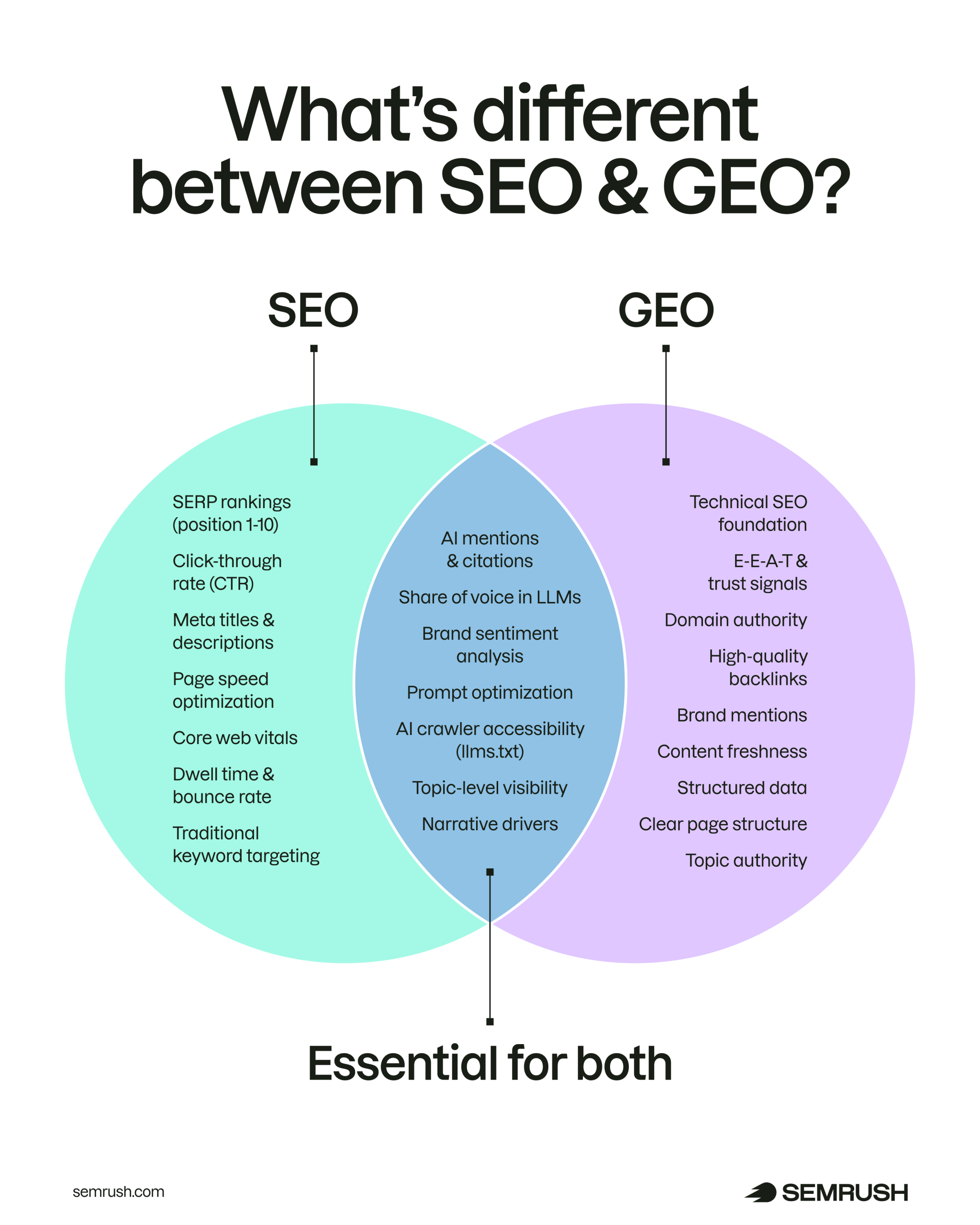
On Thursday, exactly 24 hours before Google’s official move, I went on a mild rant on X about the distinction that Google was about to codify. At 20:35 GMT, I posted the clearest summary of this entire saga:
“There is no separate, parallel set of practices for GEO that are not SEO, despite the SEO Tools’ funky infographic to tell you different. SEO and AEO are disciplines. GEO is spam. Technical GEO, for instance, is Technical Spam.”
While Google spokespeople do lead the way with new policies, it kind of becomes official when it’s posted on the Google website.
May 15, 2026 – Google Codifies the Truth
At 11:31 GMT, Barry Schwartz (@rustybrick) broke the news that Google had updated its official Search spam policies.
“In the context of Google Search, spam refers to techniques used to deceive users or manipulate our Search systems into featuring content prominently, such as attempting to manipulate Search systems into ranking content highly or attempting to manipulate generative Al responses in Google Search.”
The update clarified that spam policies now explicitly apply to generative AI responses like AI Overviews and AI Mode.
Google’s new documentation on “Optimizing your website for generative AI features” provides the direct quotes that validate SEO’s stance.
What: Clarified that our spam policies also apply to generative AI responses in Google Search. Why: To make it clear that the spam policies apply to all of Google Search, including generative AI responses.
On the “GEO” vs “SEO” Myth
“What about ‘AEO’ and ‘GEO’? … These are both terms you may see used to describe work specifically focused on improving visibility in AI search experiences. From Google Search’s perspective, optimizing for generative AI search is optimizing for the search experience, and thus still SEO.”
On Manipulating AI Responses
“Focusing on other queries that people have asked, or fan-out queries… primarily to manipulate rankings or generative AI responses in Google Search violates Google’s scaled content abuse spam policy.”
Mythbusting the Hacks
The documentation explicitly told the industry to ignore the “GEO” tactics being sold as “new paradigms”:
“While terms like Answer Engine Optimization (AEO) or Generative Engine Optimization (GEO) are common online, many suggested ‘hacks’ aren’t effective or supported by how Google Search actually works.”
Google explicitly warned against:
- Creating unnecessary LLMS.txt files.
- “Chunking” content specifically for AI.
- Seeking inauthentic mentions across the web.
No “Special” Files or Markup Required
The “GEO” influencers tried to tell you that you needed new, machine-readable files to be “AI-ready.” Google says otherwise:
“LLMS.txt files and other ‘special’ markup: You don’t need to create new machine readable files, AI text files, markup, or Markdown to appear in generative AI search... this doesn’t mean that the file is treated in a special way.”
Stop “Chunking” Your Content
There was a massive trend claiming you had to break your content into tiny pieces for AI to digest it. It was not needed then, and it’s officially not needed now:
“’Chunking’ content: There’s no requirement to break your content into tiny pieces for AI to better understand it. Google systems are able to understand the nuance of multiple topics on a page and show the relevant piece to users.”
Disclosure: I still do this in some cases. Triplets and all. Never for self-serving purposes or commodity content, though.
Don’t Rewrite for Robots
If you’re still obsessing over long-tail keyword density for AI systems, you’re wasting your time. Google’s models are smarter than your “GEO” prompts:
“Rewriting content just for AI systems: You don’t need to write in a specific way just for generative AI search. AI systems can understand synonyms and general meanings… you don’t have to worry that you don’t have enough ‘long-tail’ keywords.”
Note: Its fine to rewrite content with AI. As long as that content is not unhelpful content or commodity content.
Faking It Doesn’t Work (or at least, Google’s noticed it)
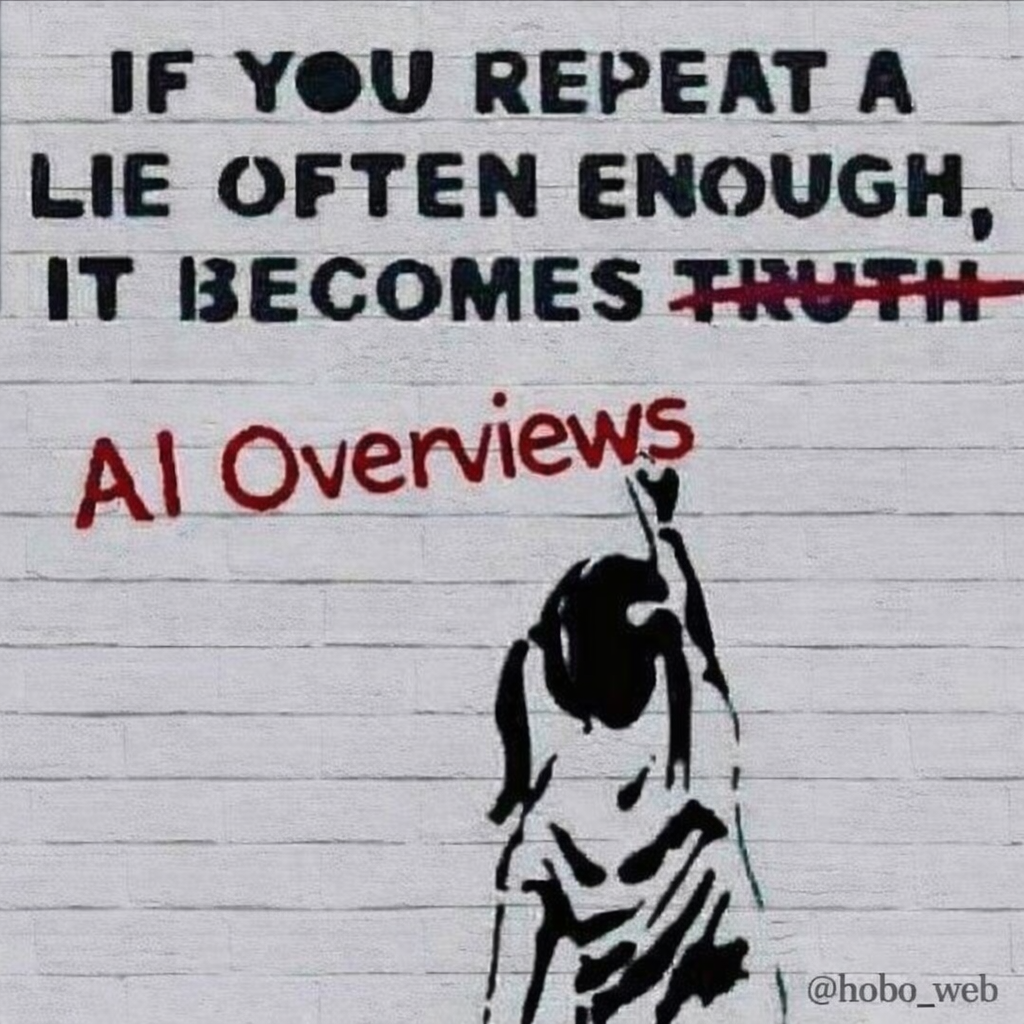
The “GEO” bros suggested chasing inauthentic mentions across the web to build “authority.” I said last year in my free AI SEO ebook, Strategic Ai SEO, that “mention pollution” was about to be a thing Google would notice.
Yes, authentic mentions count.
Google’s response?:
“Seeking inauthentic ‘mentions’ across the web isn’t as helpful as it might seem. Our core ranking systems focus on high-quality content while other systems block spam; our generative AI features depend on both.”
Structured Data is SEO, Not an AI Hack
While structured data is great for technical SEO, it’s not a secret backdoor into AI Overviews:
“Overfocusing on structured data: Structured data isn’t required for generative AI search, and there’s no special schema.org markup you need to add… continue using it as part of your overall SEO strategy.”
Google has drawn the line, too.
AI Abuse is Scaled Content Abuse.
Now we really need to be careful!
The Victory Lap for SEOs
As the news broke, I signalled that Google is coming for your GEO spam because Google defined the difference between GEO and Spam today.
Now it’s just a case of GEO bros learning SEO today and realising that GEO bros, meet Googlebot; it’s not as fluffy as in their documentation.

Why the Fundamentals Win
This wasn’t a lucky guess.
Real optimisation for AI answers (AEO, as folk like me call that aspect of SEO) is just deep, traditional SEO done more granularly and more targeted across multiple domains. I don’t sell AEO, per se, because it’s part of the SEO I do… and if that is the case, there is no GEO!
Done incorrectly and without purpose, this is spam to Google.
Google’s AI systems rely on Retrieval-Augmented Generation (RAG), which is grounded in their core Search ranking systems. If you want to succeed in this new era, you must follow the core principle:
Create valuable, non-commodity content.
As Google states:
“Create the content yourself based on what you know about the topic… Don’t just recycle what others on the internet have already said, or could easily be produced by a generative AI model.”
The “GEO” grift is over. It’s SEO.
If you’re still chasing it as a separate discipline, you’re just doing “Technical Spam.” GEO!

Official Timeline & Resources
-
- Barry Schwartz News: Search Engine Roundtable
- Google Official Policy: Google Spam Policies