
If you’re a content creator, SEO professional, or website owner wondering if the Google Helpful Content Update is still relevant in 2026, the answer is a resounding yes.
The Helpful Content system has evolved from a periodic update to a deeply integrated component of Google’s core ranking algorithm. This means its principles are more critical than ever for achieving and maintaining search visibility.
This article explores the evolution, core principles, and ongoing relevance of the Helpful Content system, providing actionable insights to help you thrive in today’s SEO landscape. By prioritising ‘people-first’ content and demonstrating E-E-A-T (Experience, Expertise, Authoritativeness, and Trust), you can align with Google’s guidelines and create content that truly resonates with your audience. Let’s dive in and explore how to make the Helpful Content system work for you.
I have written many times about Google’s helpful Content updates. I analysed almost 200 sites a year or so after the update to get a feel for what was going on. I had first-hand access to most of these sites’ Search Console data. I wrote up my reviews on the victims of HCU and HCU: Google Helpful Content Update.
The Evolution and Integration of the Helpful Content Update
Google’s Helpful Content system has undergone a significant transformation since its initial launch. The Helpful Content Update was first announced on August 18, 2022, with the stated goal to reward content where visitors feel they’ve had a satisfying experience, and devalue content written primarily to rank in search engines.
A pivotal moment occurred in March 2024 when Google announced that it had incorporated the Helpful Content system into its core ranking system. This means it is no longer a separate, periodically-run update but a continuous, real-time signal. Google stated that this integration would reduce low-quality, unoriginal content in search results by 45%.
The system works by generating a site-wide signal. If a website is determined to have a relatively high amount of unhelpful content, even its helpful pages may be less likely to perform well in search results. This encourages creators to ensure high quality across their entire site.
As of 2026, the principles of creating ‘people-first’ content remain central to Google’s evaluation of websites. The system continues to reward content that is useful, original, and demonstrates real-world experience, while de-emphasising content that seems created to manipulate search rankings. A notable development in early 2026 was the February 2026 Discover core update, which signalled Google’s intent to apply similar quality and relevance adjustments to specific surfaces like Google Discover, focusing on in-depth, original content from sites with demonstrated expertise.
Core Principles for Content Strategy in 2026: People-First and E-E-A-T
In 2026, a successful content strategy must be built on the foundation of ‘people-first’ principles and E-E-A-T (Experience, Expertise, Authoritativeness, and Trust). This involves creating content that genuinely serves a specific audience and is backed by credible, first-hand knowledge.
People-first content is created primarily for a human audience, focusing on providing value and a satisfying user experience, rather than being engineered to rank on search engines. It should be helpful, reliable, and comprehensive, leaving the reader feeling they learned something.
The E-E-A-T framework is crucial for signalling quality. The ‘Experience’ component was added to E-E-A-T in December 2022, becoming a key differentiator, rewarding content that shows real, first-hand involvement with a topic. This is especially important in an era of increasing AI-generated content.
Content should align with a website’s primary purpose and expertise. Google may penalise sites that publish off-topic content in an attempt to capture search traffic, as this can be a sign of creating content for search engines rather than users.
While AI can be used as a tool for content creation, it must be subject to significant human oversight. To meet quality standards in 2026, AI-generated content must be edited for accuracy and enhanced with original insights and expertise to provide unique value.
User intent remains a critical factor. Content must directly answer the user’s query and provide comprehensive information that satisfies their reason for searching. This involves going beyond surface-level summaries and offering unique perspectives or actionable insights.
Identifying an Impact and a Framework for Recovery
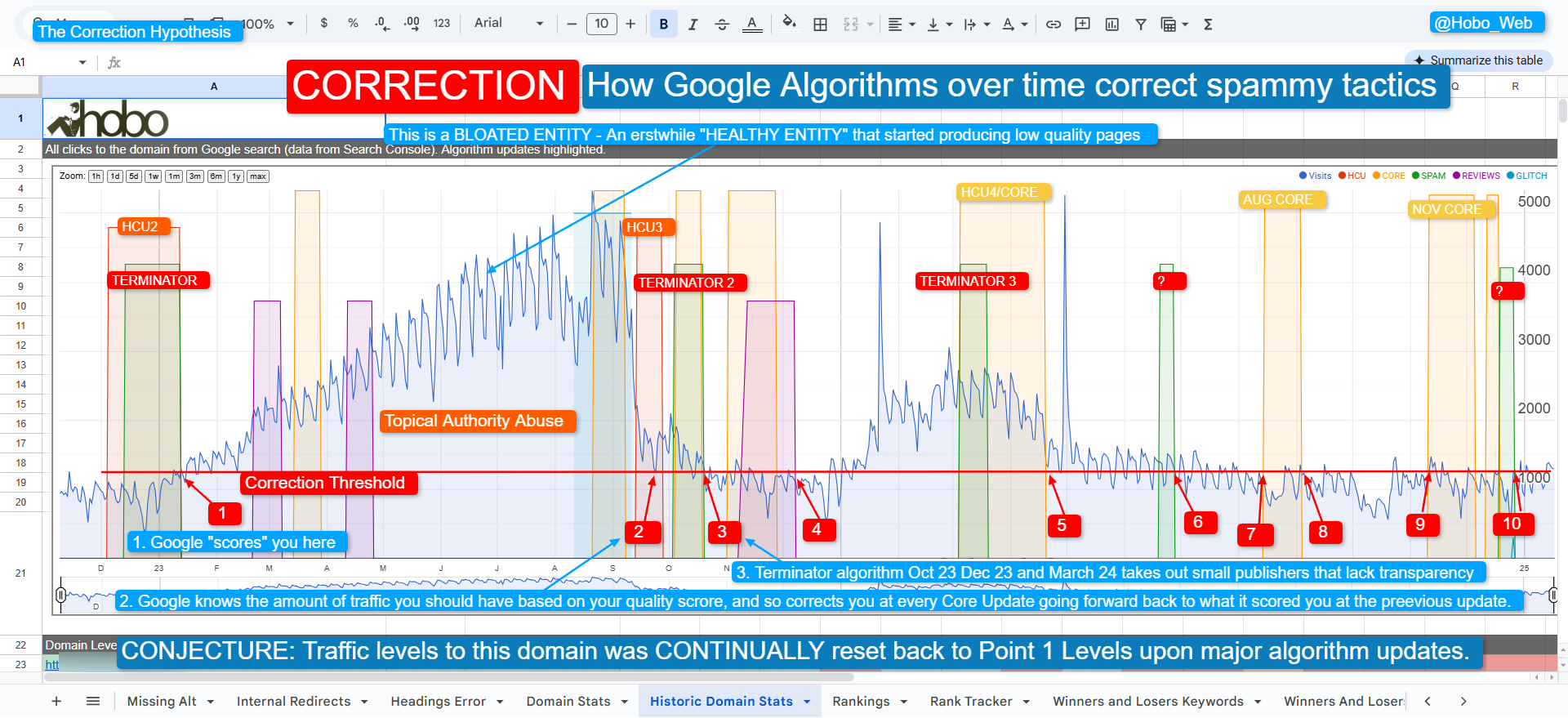
For websites that have seen a decline in organic traffic, it’s crucial to diagnose whether the drop coincides with core updates related to helpful content. Recovery involves a systematic process of auditing, pruning, and improving content to better align with people-first principles.
To determine if a site was impacted, owners should use Google Search Console to compare organic traffic before and after major update announcements. A significant, site-wide drop in traffic and rankings following a core update can indicate that the site has been classified as having a high proportion of unhelpful content.
The first step in recovery is to conduct a thorough content audit to identify unhelpful pages. Unhelpful content may include pages with thin or outdated information, low-quality text, or content that doesn’t align with the site’s core purpose. Metrics like high bounce rates or low time on page from Google Analytics can help pinpoint these pages.
Once identified, unhelpful content should be removed, merged, or significantly improved. The focus should be on quality over quantity, ensuring every piece of content serves a clear purpose and provides value to the audience.
Improving existing content involves adding first-hand experience, updating information for accuracy, incorporating unique data or insights, and better addressing user intent. This demonstrates a commitment to providing valuable and reliable information.
Recovery is not immediate and can take months. It requires a sustained effort to improve the overall quality of the site’s content. Consistently publishing new, helpful content while addressing existing quality issues is key to signalling to Google that the site has changed for the better.
Recent News and Developments
In 2026, the Google Helpful Content Update is not a one-time event but a continuously evolving system deeply integrated into Google’s core ranking algorithm.
Analysis indicates that Google’s Helpful Content System has evolved to mathematically score ‘Information Gain’, which measures the unique value a page offers over its competitors.
This, combined with a heightened focus on genuine ‘Experience,’ marks a significant shift in how content is evaluated, favouring authenticity and originality.
HCU: The Edward Show on YouTube
This recent video on HCU features a roundtable discussion moderated by Edward Sturm, host of The Edward Show, which focuses on the fallout of Google’s Helpful Content Update (HCU). I was on Edward’s show twice, myself in late 2025 and early 2026.
He is joined by three prominent SEO experts: Lars Lofgren, the former Head of Marketing at Kissmetrics and an experienced affiliate business owner who shares his personal experience of having sites “obliterated” by the update; David Quaid, an SEO veteran with over 26 years of experience and agency ownership, who provides a technical and philosophical perspective on how Google’s “nearest seed” and PageRank systems operate; and Gagan Ghotra, an SEO consultant and agency owner based in Australia, who offers insights into how the update specifically impacted niche sites in the gardening and legal sectors.
Together, the group explores the practical realities of site recovery, the decline of the traditional affiliate model, and the increasing necessity of building a multi-channel brand entity.
The video provides a deep dive into the Helpful Content Update (HCU), describing it as a “Freddy Krueger” lurking in the shadows of the Google algorithm [01:32].
The Evolution of HCU
-
Timeline: It began with “earthquakes” in late 2022, reached a significant peak in September 2023, and experienced a “double tap” in early 2024 [01:18].
-
Integration: Originally a separate component, HCU has now been merged into Google’s core algorithm, making it an ever-present classifier [01:45].
Theories on Why Sites Get Hit
-
The “Ad Display” Theory: David Quaid notes that many hit sites match the profile of sites paid search managers would block from display networks—they often lack a brand purpose beyond “SEO for SEO’s sake” [09:58].
-
The “Sameness” Problem: Google aims to tackle content that simply paraphrases existing top results without adding new information [13:58].
-
Monetisation Signals: Every site observed to be hit had some form of monetisation, such as AdSense or affiliate links [26:31].
-
The Editorial Balance: Gagan Ghotra suggests that sites offering 100% positive reviews to maintain affiliate relationships were targeted, as Google prefers the balanced opinions often found on platforms like Reddit [14:37].
The “Entity” vs. SEO Differential
Lars Lofgren highlights a crucial “margin of error” for brands. If a brand has a strong “entity” (social presence, brand searches, mentions on other platforms), it can support more SEO content. The trouble starts when the amount of SEO content drastically outstrips what the brand’s real-world entity can support [01:07:52].
He shares a personal example where an expert post on his hit HR site failed to index, but the exact same post ranked on his personal domain because of his established personal brand [45:07].
Strategies for “Unsticking” a Domain
QUOTE “These are not “recoveries” in the sense that someone fixes a technical issue and they’re back on track – they are essentially changes in a business’s priorities (and, a business might choose not to do that).” Google, John Mueller
-
The 90% Purge: For a site that has lost 90% of its traffic, the recommendation is to immediately delete or materially revamp roughly 90% of the content [01:33:51].
-
Stopping the Bleeding: In less severe cases, Lars suggests a “70 to 90%” purge to stabilise the domain, though he warns that material progress may not be seen for a year as Google re-evaluates the site [01:35:53].
-
Double Redirects: A common “black hat” or aggressive tactic involves moving the domain to two new domains to try and salvage the brand under a clean slate [02:55].
-
Multi-Channel Pivot: The experts agree that for long-term viability, creators must move away from 100% reliance on SEO and build audiences on YouTube, LinkedIn, or TikTok [01:34:42].
Tom Capper is a Data Scientist and Search Science Lead at Moz who forensically identified the “Synthetic Gap” that triggered the Helpful Content Update (HCU) penalties. In his analysis of the September 2023, March 2024, and August 2024 updates, Tom debunked the idea that the HCU was a complex ML content assessment. Instead, he posited it was likely a mathematical ratio check between Domain Authority (DA) and Brand Authority (BA). His data revealed that HCU “Losers” were consistently sites that were “Over-SEO’d”—possessing high link profiles (DA) but low navigational demand (BA). He argues that the HCU is a penalty for sites where the “Link Signal” outpaces the “Brand Signal” by a ratio of 2:1, flagging them as synthetic.
“The HCU appears to be based, at least in part, on an older and simpler system… HCU losers had markedly lower BA (37 vs. 50-52) and higher DA:BA ratios (2:1 vs. 1.4:1)… ‘If you have lots of links (over-SEOd?), and not much navigational interest in your site, you probably don’t deserve to rank as well as it might look like you do.’” — Tom Capper, The Helpful Content Update Was Not What You Think
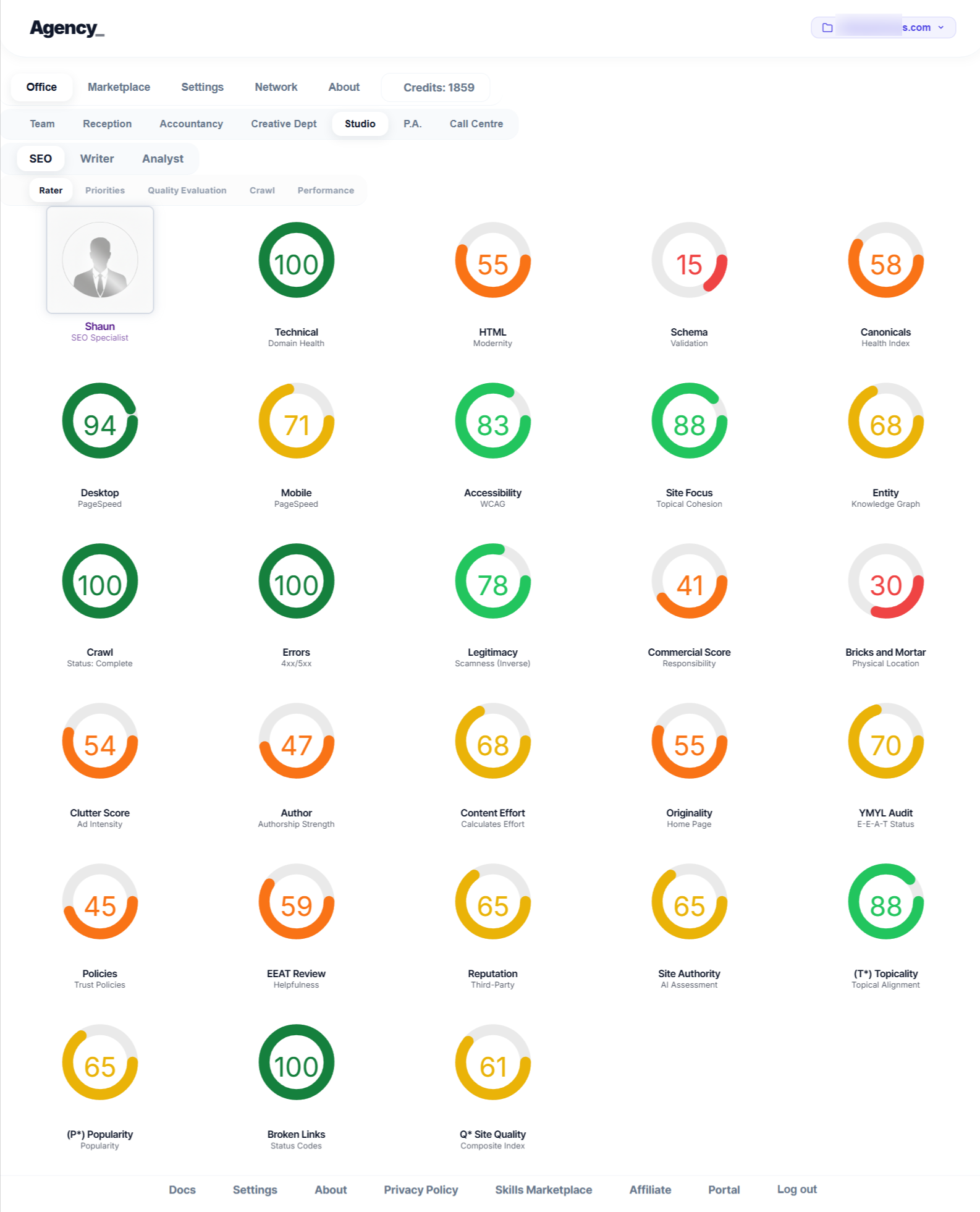
My own work on the Helpful Content Updates shifts the focus away from surface-level content fixes toward Entity Health and Trust. I posit that “Helpfulness” is not just a content metric but a foundational Quality Signal tied directly to E-E-A-T (Experience, Expertise, Authoritativeness, and Trustworthiness).
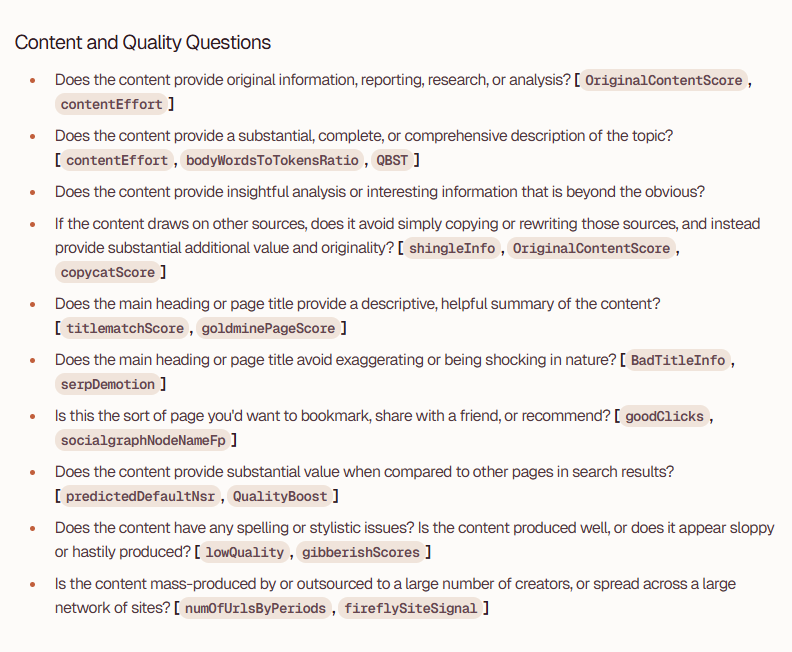
In my feature on Searchable.com titled “Decoded: Google Helpful Content Guidelines“, I attempted to visualise what helpful content actually looks like now that we know attribute names for aspects of Google. I’m not saying I am a 100% accurate with every placement of every attribute, but it gives you an understanding of how we understand how Google works with the latest data from its own official quality rater guidelines and the unofficial Google leak of 2024.
NB: The reference to a 45% reduction in low-quality content was a goal set by Google during the March 2024 update. In 2026, industry data (from sources like NewzDash and SEO Sherpa) suggests that while “scaled AI spam” has been reduced, the “Great Decoupling” (where impressions stay high but clicks drop due to AI Overviews) is the new challenge for your team to monitor.
Key Findings & Hypotheses
-
The Disconnected Entity Hypothesis: I’ve pinpointed that many sites decimated by the 2023–2024 updates didn’t just have “bad content” – they lacked a verifiable entity. If Google cannot vouch for who owns the site and why it exists, the content is classified as “Unhelpful” regardless of its actual quality.
-
Helpfulness as a Demotion Signal: My analysis confirms that the HCU system does not “promote” helpful content; rather, it identifies and demotes unhelpful content. This is often a site-wide classifier that can suppress even high-quality individual pages.
-
The 2.5.2 Compliance Domino Effect: I’ve identified Section 2.5.2 of the Google Quality Rater Guidelines as the ultimate “blueprint” for recovery. This section requires absolute clarity on ownership and authorship. Failure here triggers a negative trust signal that technical SEO audits cannot fix.
-
Trust as the Lever: Of the E-E-A-T pillars, my research shows Trust is the primary lever. A lack of transparency regarding site responsibility (The “Who”) effectively nullifies any expertise or experience shown on the page.
Strategic Outcomes

-
Beyond Technical SEO: My audits now prioritise “Entity Verification” over keyword optimisation.
-
The “99% Content” Strategy: I advocate for shifting focus from “trending keywords” to the 99% of unique, experience-based content about the business (case studies, unique documentation) that AI cannot replicate.
-
Recovery Framework: I’ve established that recovery is a long-term “classification” change, not a quick technical patch. It requires a sustained commitment to transparency and legal compliance (FTC, data protection) to signal to Google that the entity is “Healthy.”
-
Technical Mapping: Linked the public “Helpful Content System” principles to internal API attributes like
contentEffort,siteFocusScore, andOriginalContentScore. -
The LLM-Effort Hypothesis: Developed a framework for understanding how Google uses Large Language Models to estimate the “Intellectual Investment” of a page, effectively countering low-effort AI spam.
-
E-E-A-T Decomposition: Proved that E-E-A-T is not a single score but a distributed set of attributes, including
scamness(Trust) andsiteAuthority(Authoritativeness). -
Strategic Framework: Created the “Effort-First” content workflow, advising brands to shift from keyword volume to “unreplicable” assets (original data, expert interviews, custom multimedia).
The Verdict: In the 2026 search landscape, if Google cannot vouch for you as a trustworthy entity, you aren’t just ranking lower – you’re effectively out of the game.
Frequently Asked Questions
What is the Google Helpful Content Update in 2026?
In 2026, the Google Helpful Content Update is a fundamental part of Google’s core ranking system. It prioritises content that is genuinely helpful to people, demonstrating real expertise and a satisfying user experience, while de-emphasising content created primarily for search engine rankings.
How does the Helpful Content system affect a website’s search volume?
Websites with in-depth, high-quality content that satisfies user intent are likely to see an increase in search visibility and organic traffic. Conversely, sites with a high amount of shallow, unoriginal, or SEO-first content may experience significant site-wide drops in traffic.
What kind of content is considered ‘helpful’ in 2026?
Helpful content in 2026 is people-first, demonstrating expertise, experience, authoritativeness, and trustworthiness (E-E-A-T). It directly answers a user’s query, provides original insights, and offers a positive user experience, often including signals of real-world experience.
What is the significance of the March 2024 Google update?
The March 2024 update marked the integration of the Helpful Content system into Google’s core ranking algorithm. This signalled that content quality is a foundational and continuous signal for how Google evaluates all websites, rather than a periodic check.
Can I use AI to write content without being penalised?
AI-generated content is not automatically penalised, but it must meet Google’s high-quality standards. In 2026, successful strategies will use AI as a drafting tool that requires substantial human editing, fact-checking, and the addition of unique insights and first-hand expertise to provide real value.
How do I determine if my site has been affected by Google’s helpful content systems?
Check Google Analytics and Search Console for significant drops in organic traffic that coincide with the announcement dates of major Google core updates. A site-wide decline, rather than a drop on just a few pages, is a strong indicator of an issue with helpfulness.
What is ‘Information Gain’ and why is it important?
‘Information Gain’ is an idea that has become popular, which may be used by Google to assess the unique value a page offers compared to its competitors. Content that provides original insights, unique data, or a fresh perspective is more likely to score higher in ‘Information Gain’ and rank well.
How does the Helpful Content System assess ‘Experience’?
The ‘Experience’ component of E-E-A-T emphasises real-world, first-hand involvement with a topic. Content that demonstrates genuine experience, such as personal anecdotes, case studies, or original research, is highly valued by Google.
What does it mean for the Helpful Content System to be a ‘site-wide signal’?
The ‘site-wide signal’ means that Google evaluates the overall quality of content across an entire domain, not just individual pages. Having a high proportion of unhelpful content can negatively impact the ranking of even the helpful pages on a site.
What steps can I take to improve my website’s helpfulness score?
Conduct a thorough content audit to identify and remove or improve unhelpful content. Focus on creating people-first content that demonstrates E-E-A-T, provides unique value, and directly addresses user intent. Consistently publish high-quality content to signal to Google that your site has improved.
How often does the Helpful Content System update?
The Helpful Content System operates continuously as part of Google’s core ranking algorithm. This means that content helpfulness is constantly being evaluated, and rankings can fluctuate at any time based on changes in content quality or user behaviour.
What are some examples of ‘people-first’ content?
Examples of ‘people-first’ content include in-depth guides that thoroughly answer user questions, original research that provides unique data and insights, and personal stories that demonstrate real-world experience with a topic.
How does Google define ‘expertise’ in the context of E-E-A-T?
Google defines ‘expertise’ as a high level of knowledge or skill in a particular area. This can be demonstrated through formal education, professional experience, or in-depth knowledge of a topic.
What role does authoritativeness play in the Helpful Content System?
Authoritativeness refers to the reputation and credibility of the content creator and the website as a whole. Google looks for signals of authoritativeness, such as links from other reputable websites and mentions in industry publications.
How can I build trust with my audience and with Google?
Building trust involves providing accurate and reliable information, being transparent about your sources, and creating a positive user experience. This includes having a clear privacy policy, up-to-date terms and conditions and other contextually relevant support pages, a secure website, and an easy-to-navigate design.
Disclosure: I use generative AI when specifically writing about my own experiences, ideas, stories, concepts, tools, tool documentation or research. My tool of choice for this process is Agency, my own platform, using Google Gemini Pro 2.5 deep reasoning. This content is a direct result of cutting-edge HITL AI content production, using a process I designed myself and described in my 2025 ebook, Strategic AI SEO. Also note: This content has not been created to “pass off” as human, or “write as Shaun Anderson”. It is raw, factually correct content, which I then edited. Agency can produce content with certain styles, but it is not my aim to fool readers. This is the state of AI content in March 2026, an example of the default Agency creative output. All content was conceived, edited, fact-checked and verified as correct by me (and is under constant development). This article represents the second “beta-test” of Agency, an autonomous AI-powered Agency as hinted at in my March 2026 SMX Paris keynote. Edited by Shaun Anderson AKA Hobo. Corrections welcome. See my AI policy.